WINTER ELOPEMENT GUIDE
HOW, WHERE, AND IDEAS FOR YOUR WINTER ELOPEMENT
There’s something so peaceful about winter – when the earth seems to sleep under a blanket of snow, the air feels crisp, and there’s quiet tranquility in the flurries floating down to the ground.
Now imagine eloping in a winter wonderland, exchanging vows amidst your own cozy haven, embraced by the brisk winter air and expansive skies. Plus, you can even self-solemnize your marriage during a Colorado winter, where the white snow and crisp air add an extra layer of fun and excitement to your elopement. It truly takes a special couple to choose such a dramatic and romantic time of year for their winter wedding!
This winter guide is going to walk you through how to elope in the winter, from the best months to choose for your adventure to what to wear and everything else you need to consider. Whether you’re envisioning a mountaintop ceremony with panoramic views or a secluded forest setting surrounded by snow-covered pines, winter offers a plethora of stunning backdrops for your winter elopement. So, let’s dive into the magical world of winter elopements and make your dream day a reality!
WHERE TO ELOPE IN THE WINTER
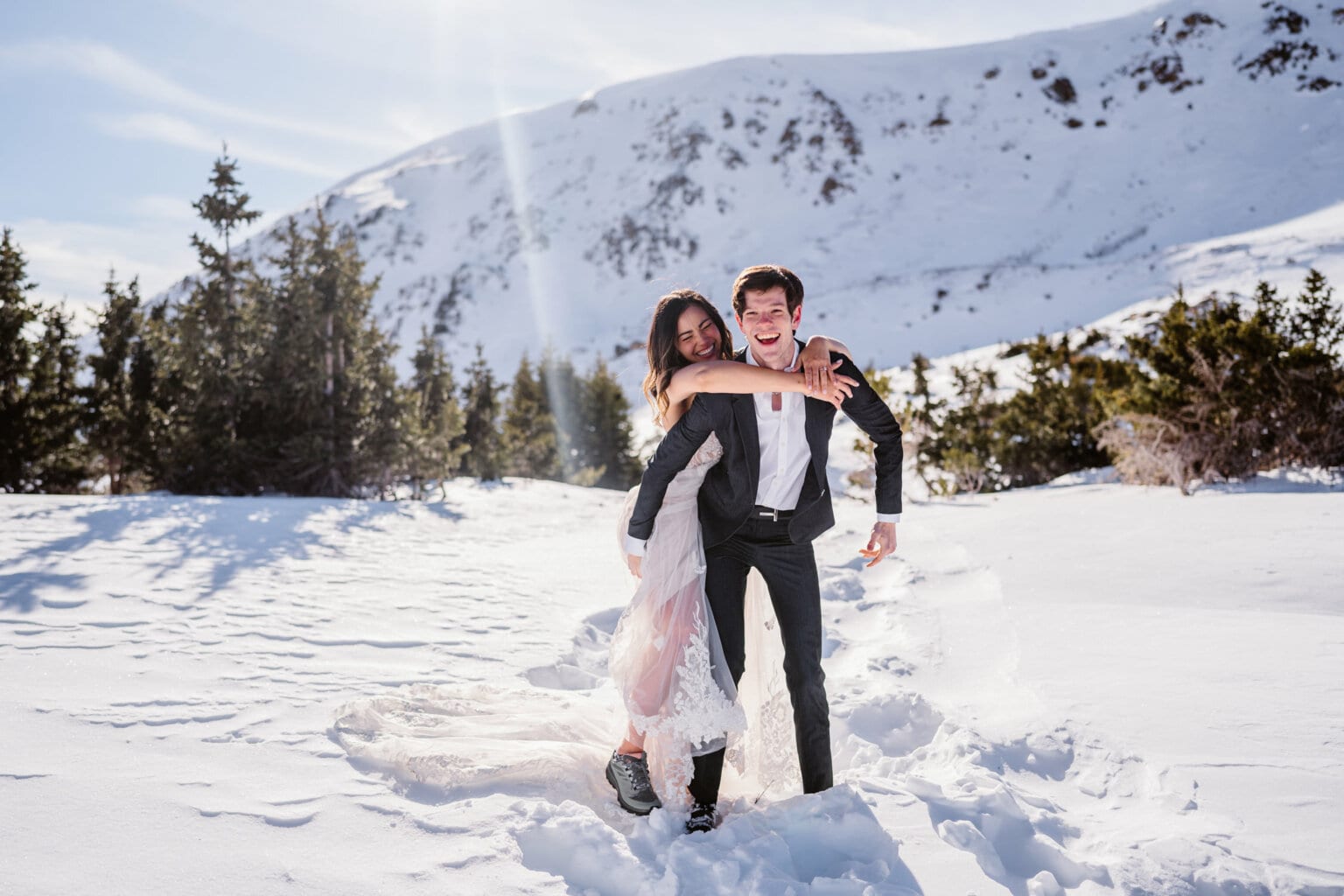
One of the best things about winter elopements is that even the places that are jam-packed with crowds in the summer are often totally empty in the winter! This means that on your winter elopement day, you get to enjoy a lot more privacy as you say your vows.
Let’s face it: Eloping in the winter is especially beautiful – most days are still sunny, so you can enjoy the snow, and the sparkle that sunny days create on the frost, without feeling the gloom that winter can be notorious for. You can also combine the mountains capped off with some urban exploring by taking a romantic stroll on the city streets!
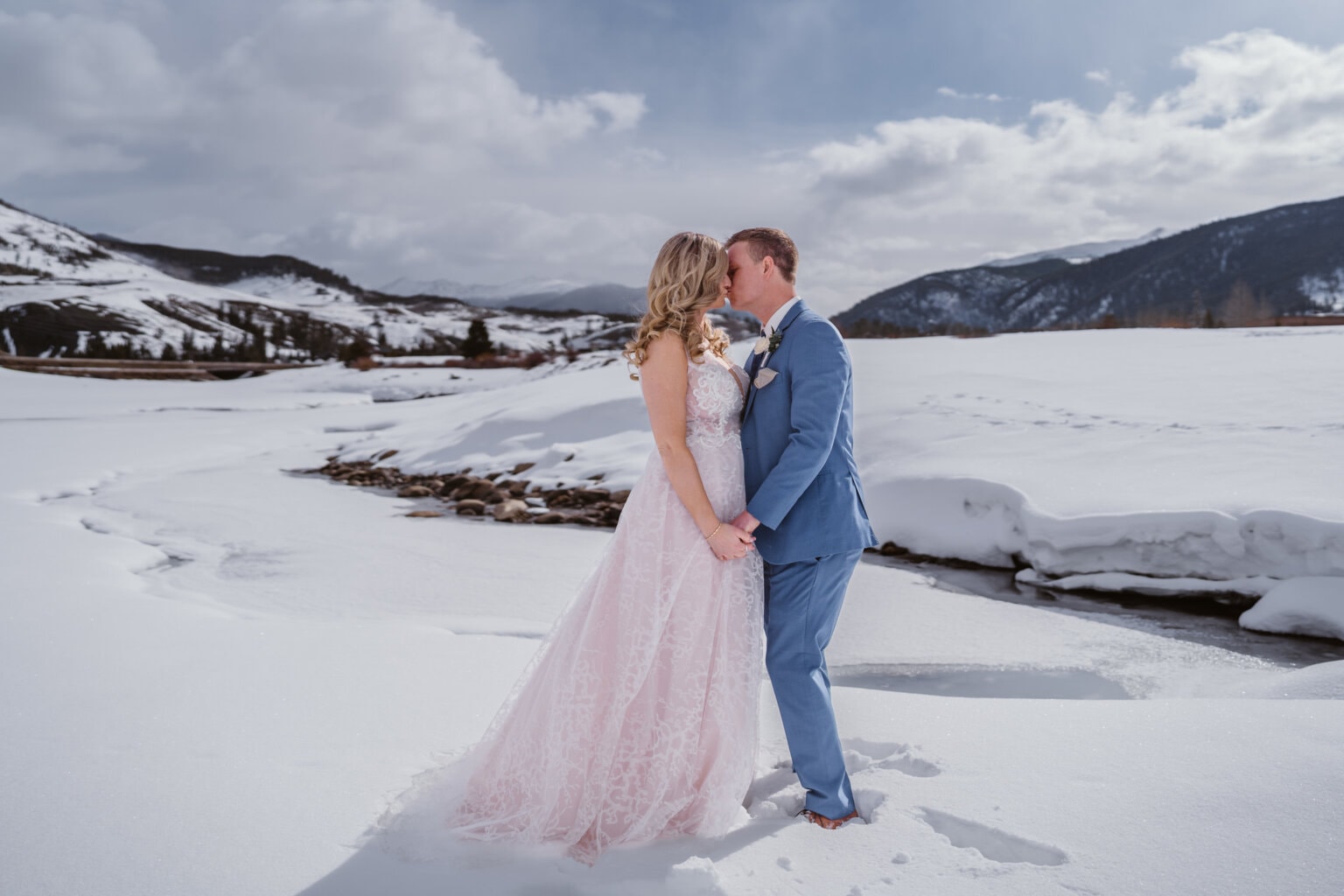
Winter landscapes really provide stunning locations for wedding photos. Snow-covered trees, icy lakes, and even softly falling snowflakes can create breathtaking and ethereal images. Embracing the winter scenery can result in truly magical and romantic photographs.
Continue reading below for my best winter elopement location!
• SILVERTHORNE
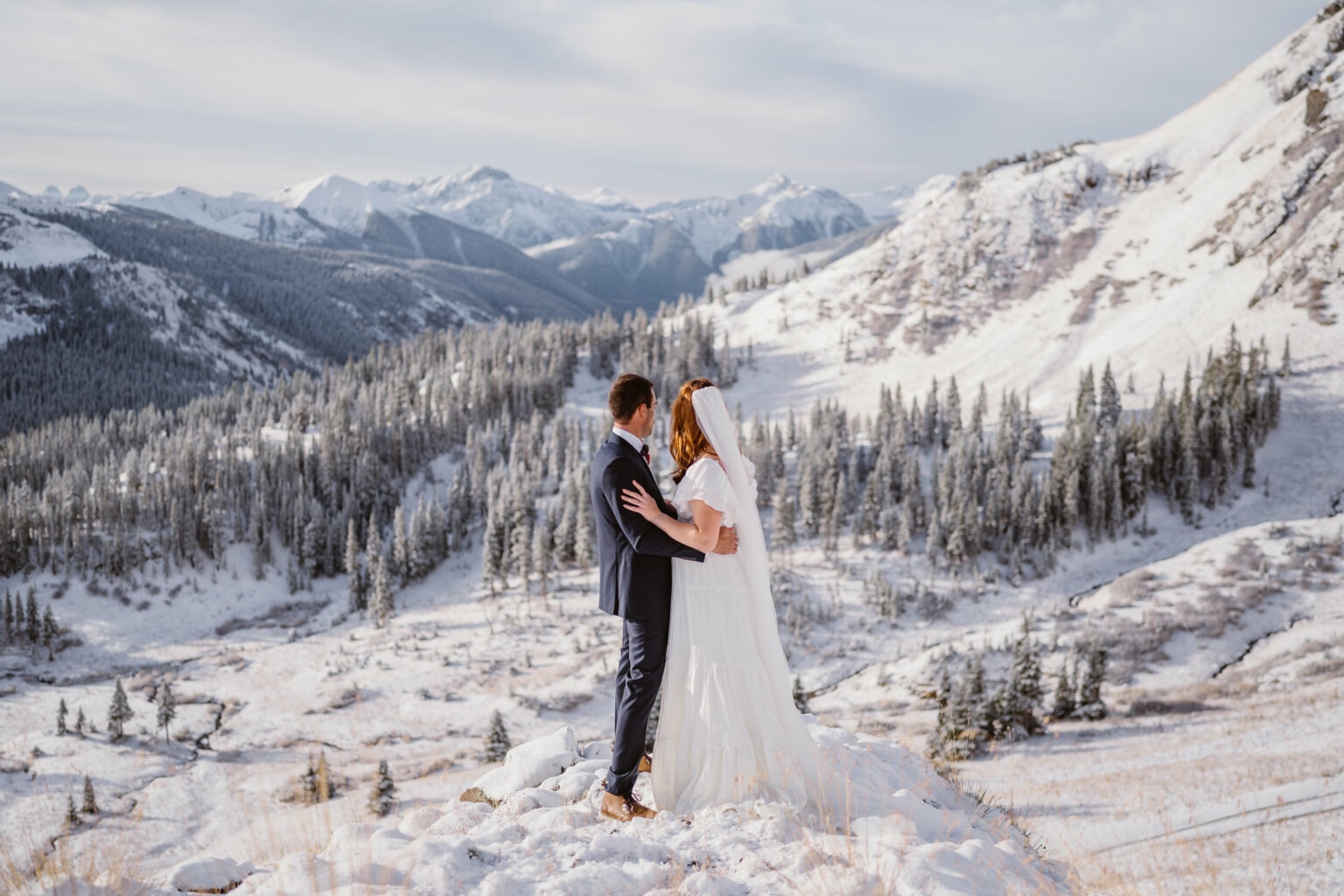
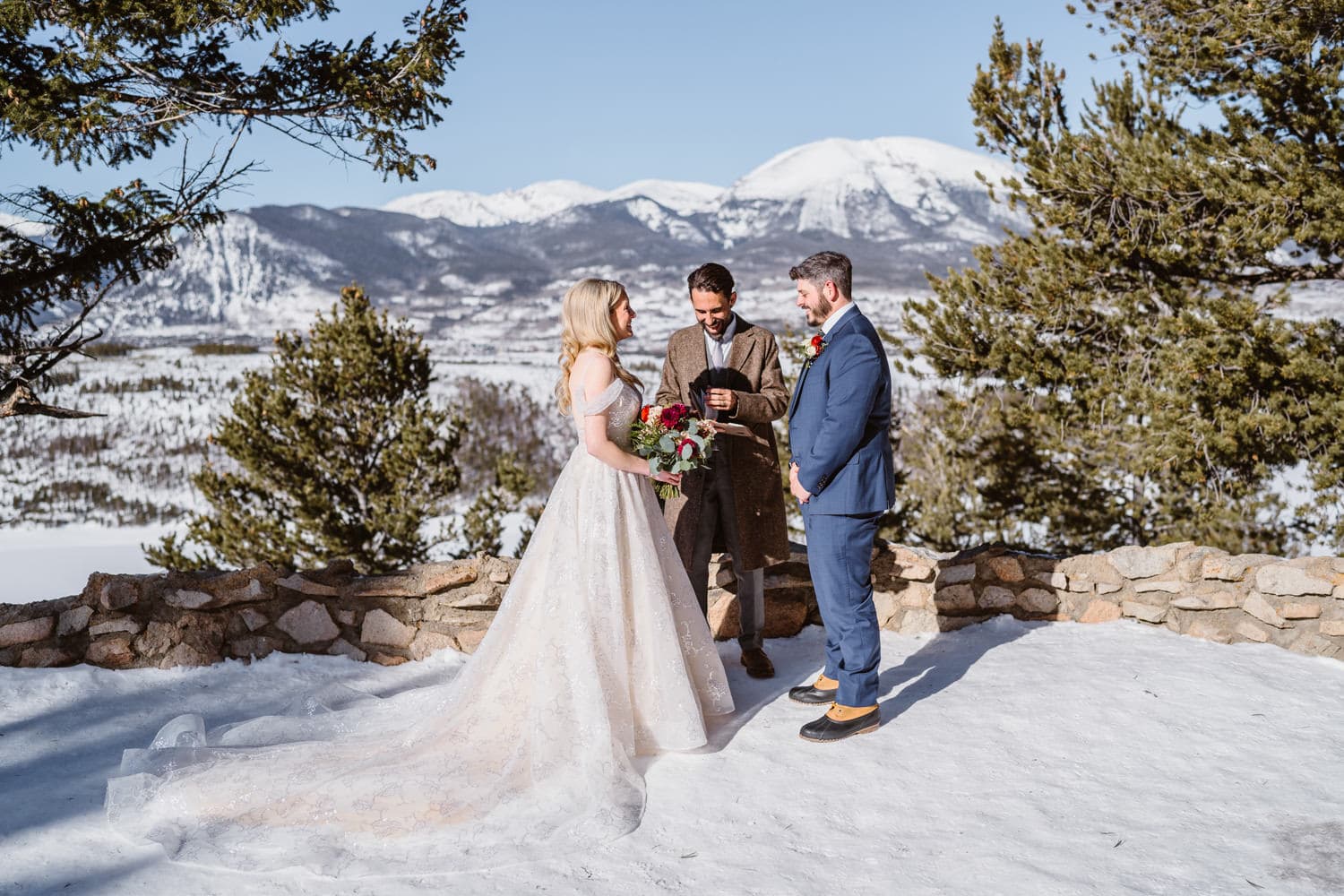
Silverthorne isn’t just a pretty face – it’s the gateway to the Front Range, offering both stunning scenery and convenient proximity to Denver. This makes your winter elopement not just beautiful but also incredibly practical. Imagine this: you can say “I do” with the snowy Rockies as your backdrop, and then dive right into adventure. Think dog sledding, snowmobiling, or snowshoeing near the breathtaking Sapphire Point. And here’s the kicker – you could even exchange vows on the edge of a frozen lake. Yeah, you heard me right! Silverthorne is all about making your special day as easy and unforgettable as possible.
• BRECKENRIDGE
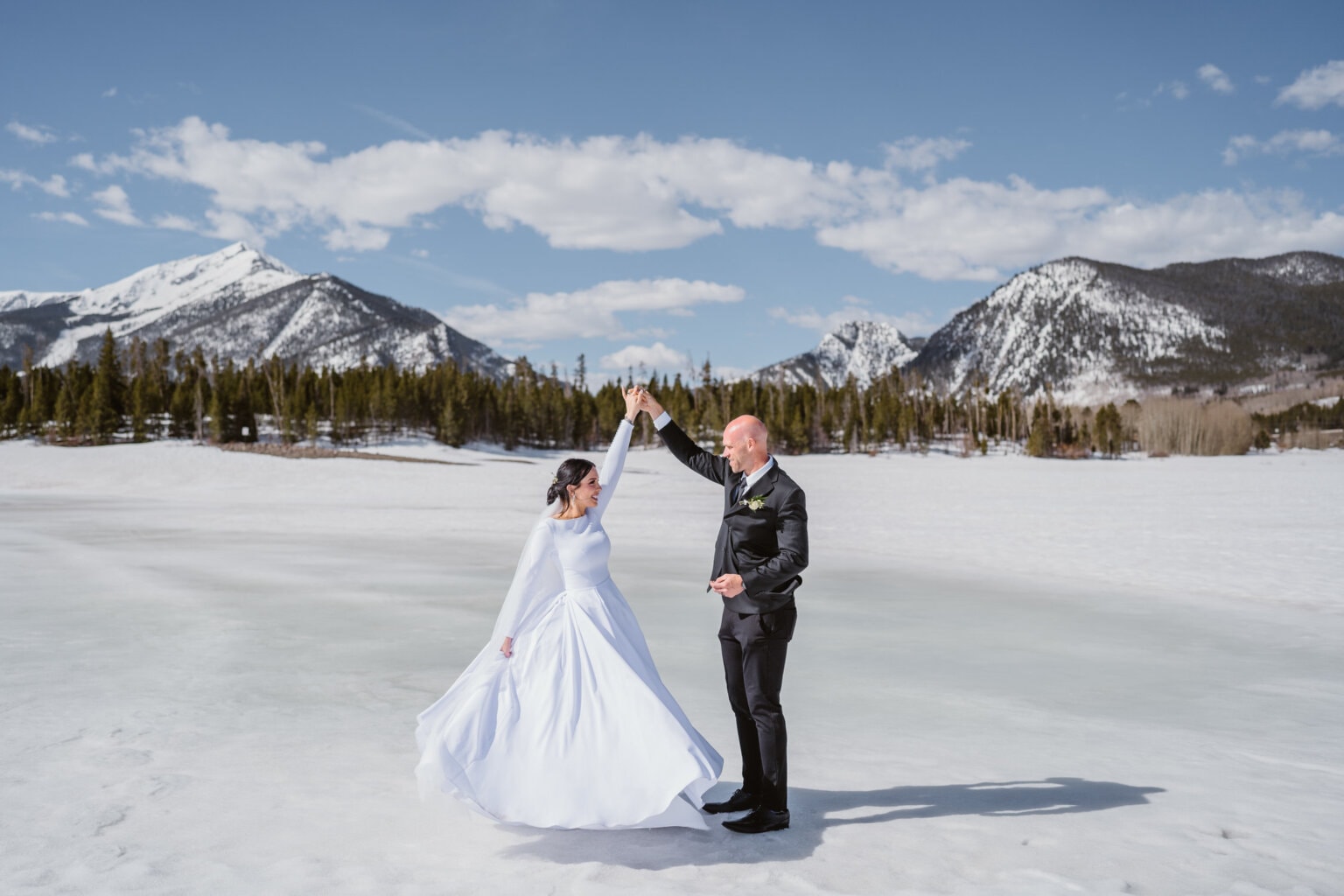
Nestled between Vail and Silverthorne, the charming town of Breckenridge resembles a scene straight out of a snow globe. Opting for a winter elopement in Breck opens up a world of possibilities—you can glide down the slopes on skis or explore the serene outdoor trails on snowshoes. With its relaxed and welcoming atmosphere, the town provides ample opportunities for exploration, both outdoors and within its cozy confines.
• TELLURIDE
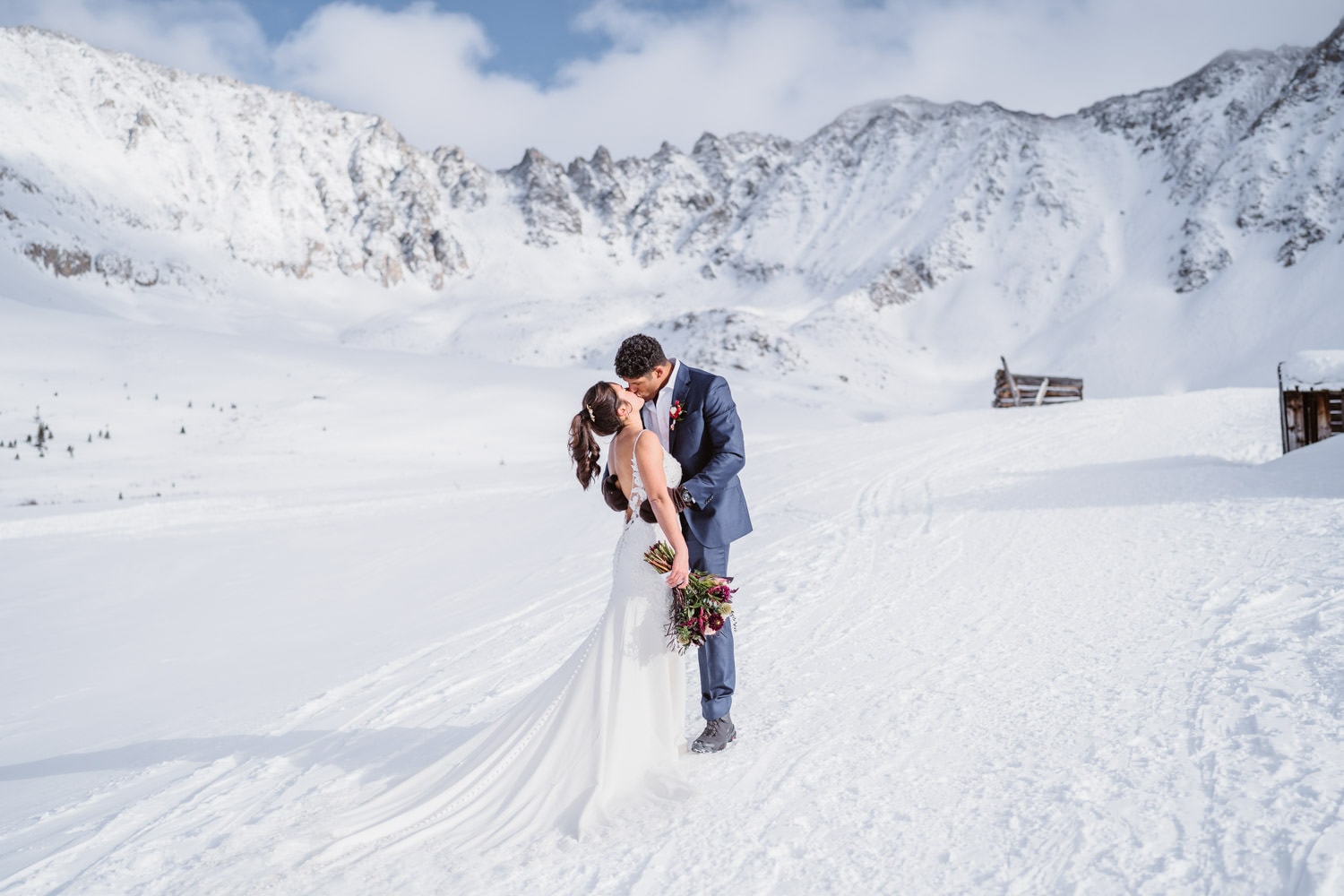
If you’re up for somewhere remote and beautiful, then Telluride is one of the best winter elopement locations. You really can have it all in Telluride. The town is only 12 blocks long and 8 blocks wide and boasts historic Victorian architecture, boutique shops, and plenty of local gems. But that’s not even the highlights of the area: The towering snowcapped peaks highlight some of the best skiing and backcountry snowshoeing.
• ROCKY MOUNTAIN NATIONAL PARK
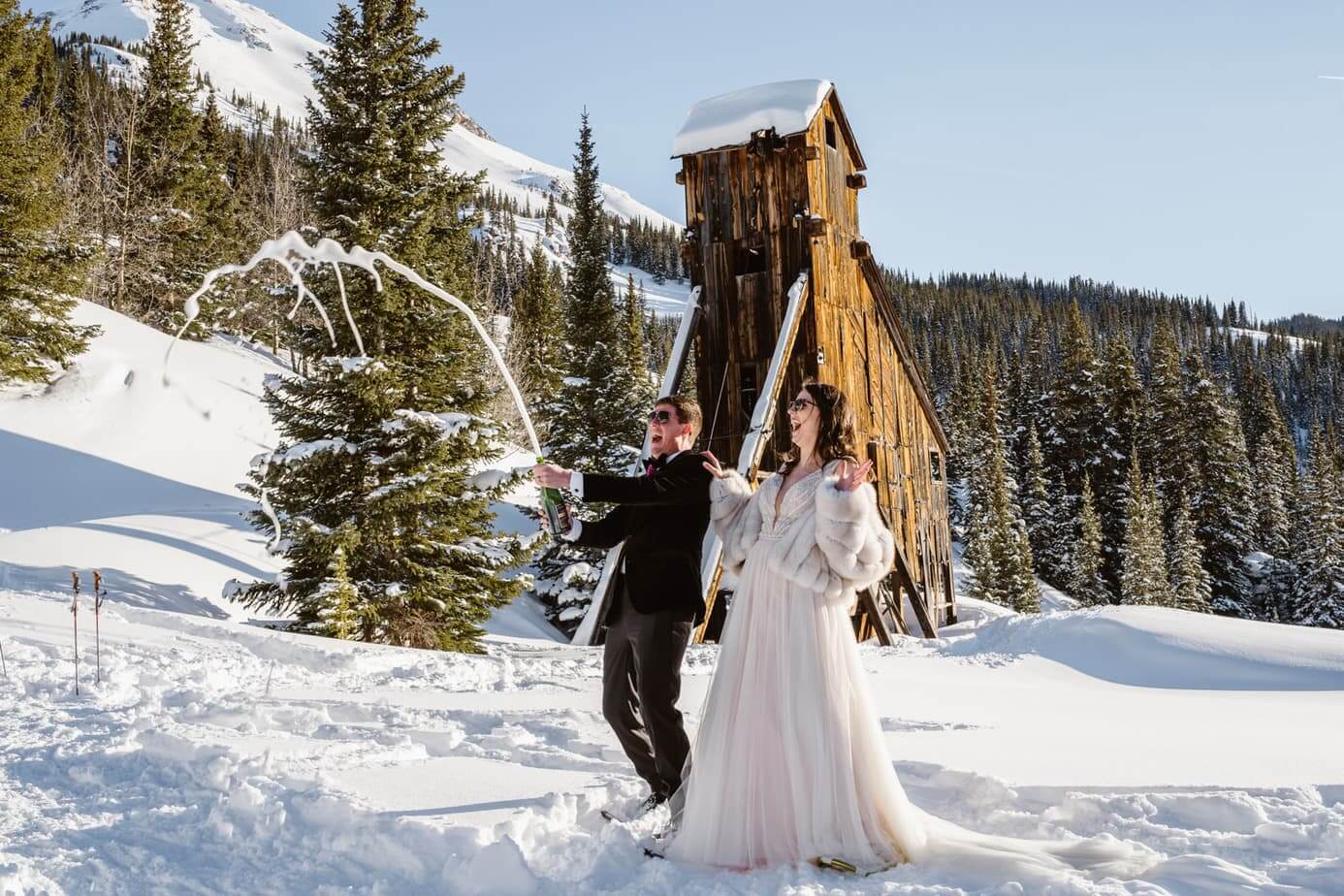
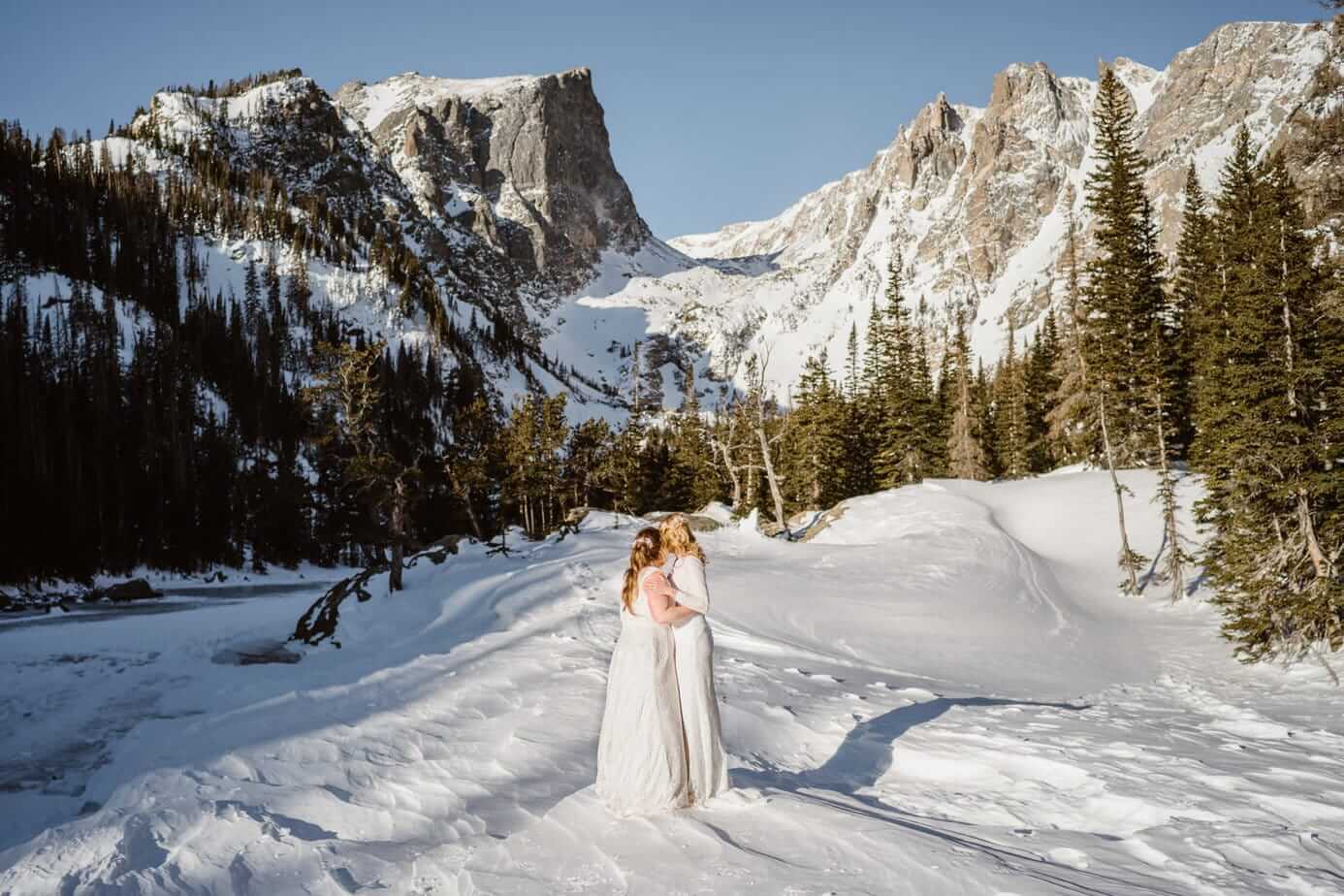
Rocky Mountain National Park is one of the most popular national parks in the country, but winter transforms it into a serene wonderland! The towering peaks and jagged rock formations, sculpted by glaciers millions of years ago, create the jaw-dropping vistas the Rockies are famous for. Snow blankets the landscape, turning it into an epic winter wonderland of peaks, valleys, and frozen alpine lakes. While many higher elevation roads close for the season, the lower elevation trails remain open for snowshoeing adventures. So, you get to explore a quieter, more magical side of the park without the usual crowds.
• ALMA
Alma’s got a little secret for you – winter’s where it’s at. This hidden gem lets you escape the tourists and crowds of nearby ski towns for a peaceful day in the mountains. Picture this: unique cabins and cozy Airbnbs nestled in the snow, giving you an incredible choice of places to stay. Celebrate your winter wedding in Alma, surrounded by the serene beauty of snowy peaks. It’s the perfect spot for an intimate and unforgettable experience.
• WINTER CABINS
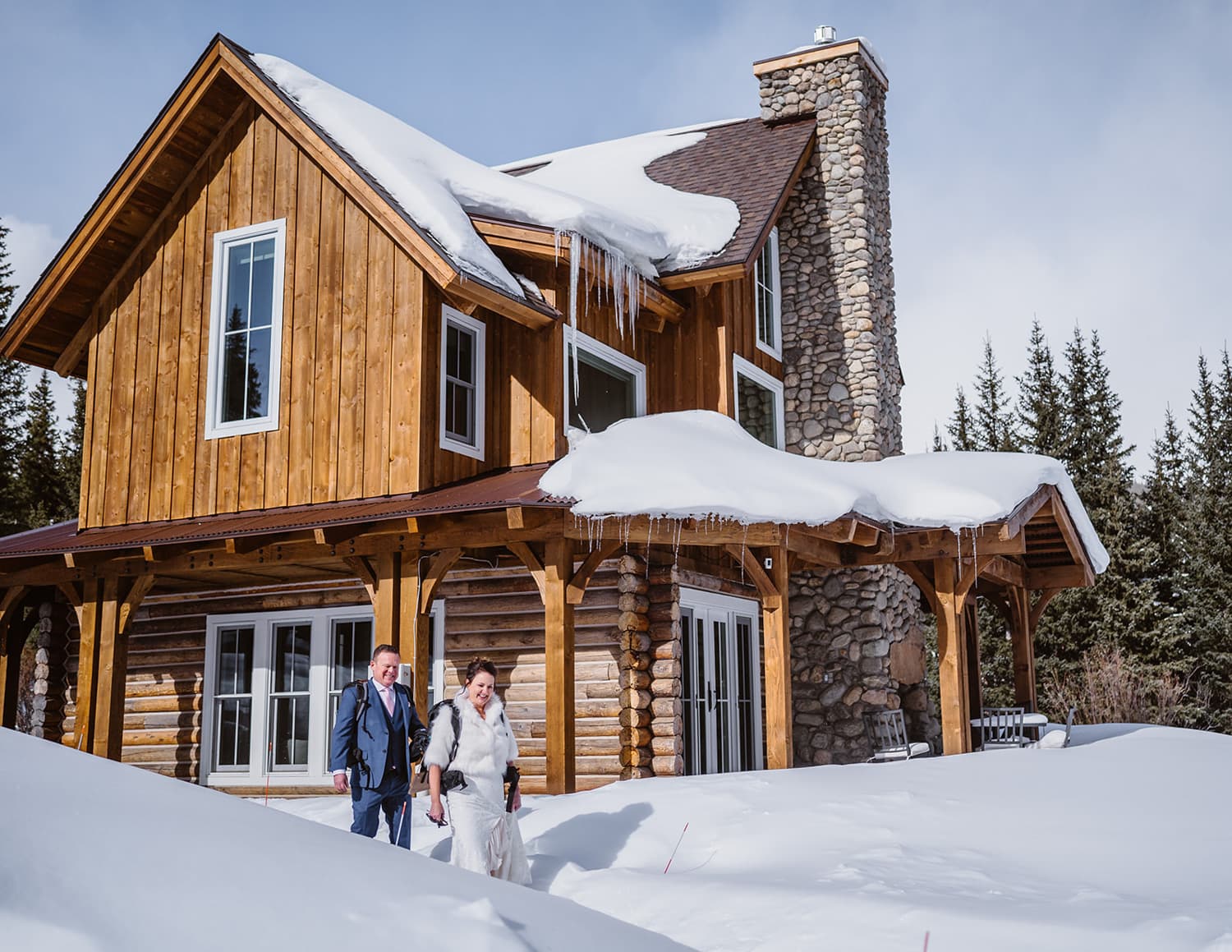
Eloping at a winter cabin unfolds a magical escape amid pristine snow and towering pines. Picture this: a crackling fireplace casting a warm glow, soft candlelight illuminating love’s embrace. It’s an intimate sanctuary, far from the bustle of traditional wedding venues. Whether cocooned under blankets or hand in hand in the winter wonderland, this experience ignites romance and crafts cherished memories in nature’s serene embrace.
FUN WINTER ELOPEMENT ACTIVITIES AND IDEAS
With powder-filled valleys and snow-capped peaks providing an epic backdrop, your winter elopement promises to be unforgettable. Yet, don’t merely consider it as a picturesque scene; the essence of eloping in winter lies in embracing the snowy wonderland for a day filled with joy and adventure in your elopement activities. Plan your day to be an immersive experience—imagine the most exhilarating and enjoyable moments possible. In the winter, there are no limits to creativity and excitement!
Here are some winter elopement ideas to get the gears turning.
• SNOWMOBILING
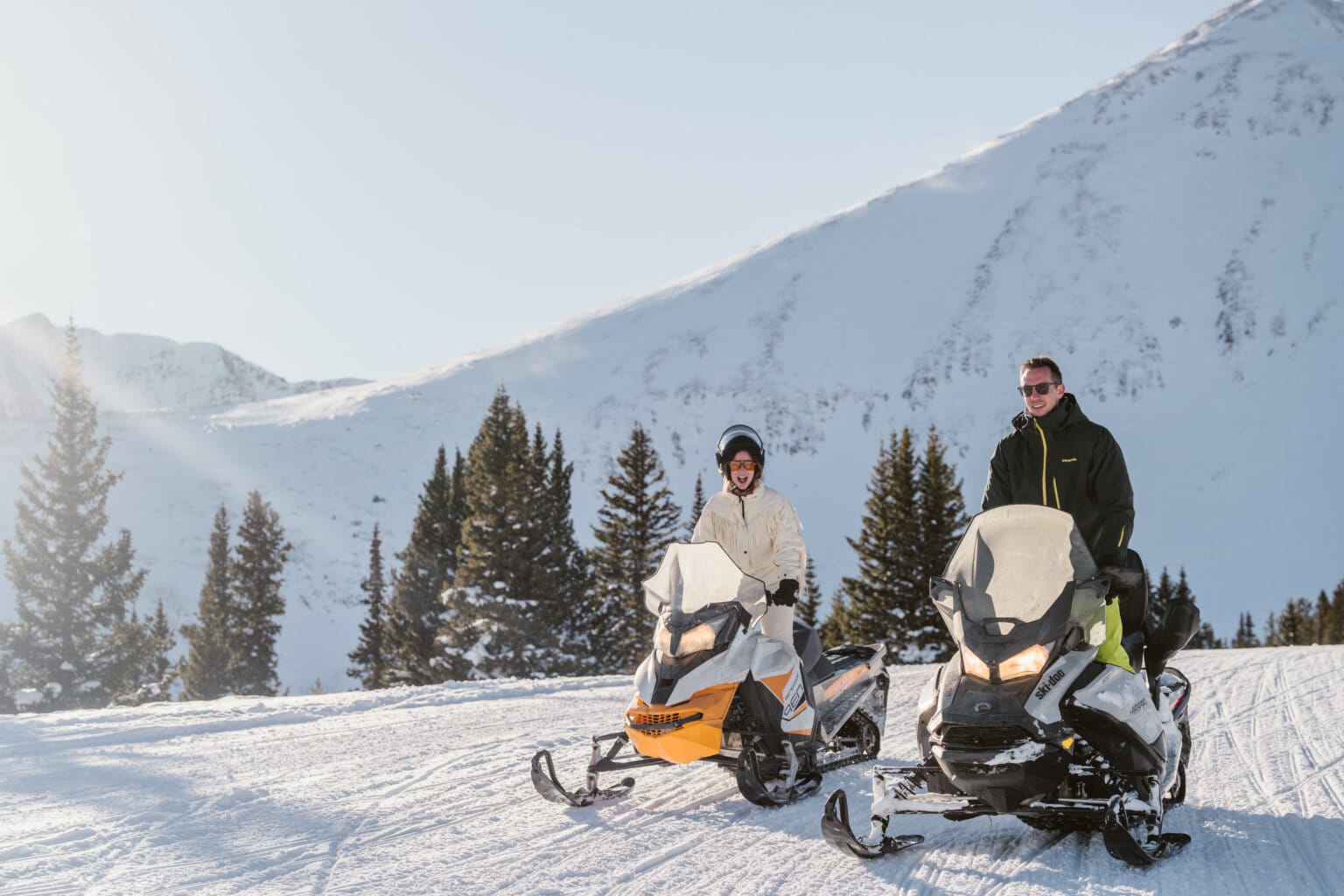
If you’re up for an exhilarating adventure, this could be just the ticket for YOU! Glide over snow and ice, leisurely soaking in the scenery, or zip (safely) across open spaces. Whether you opt for a guided tour or strike out solo, snowmobiling offers a fantastic means to swiftly explore snowy terrain. Easily reach remote spots and escape the hustle and bustle of ski town traffic for your winter elopement. With the capacity to traverse vast distances in winter, you’ll discover enchanting locales and breathtaking winter vistas!
• SNOWSHOEING
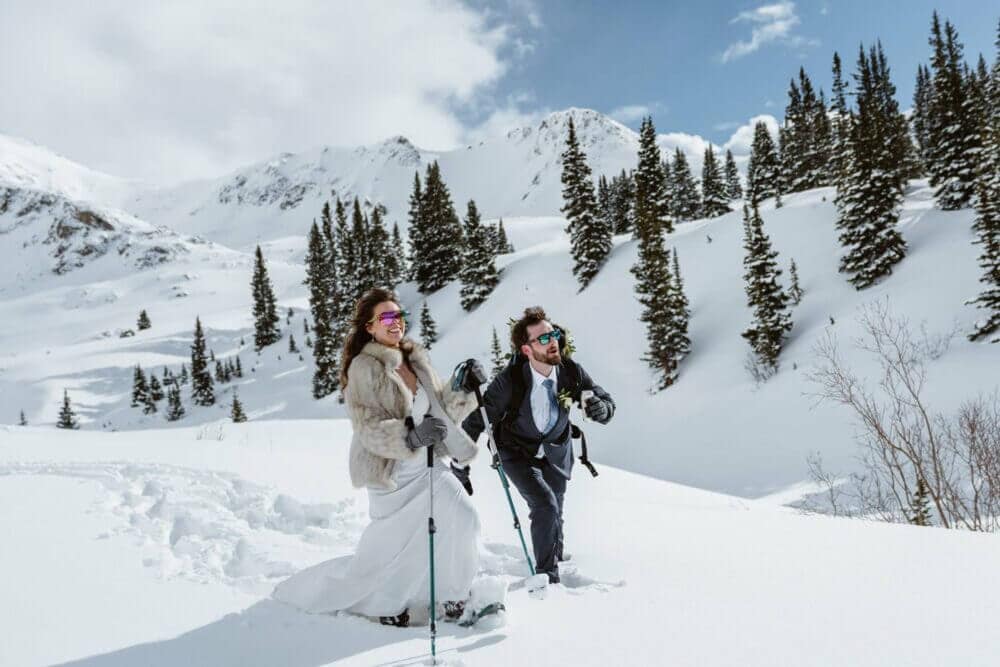
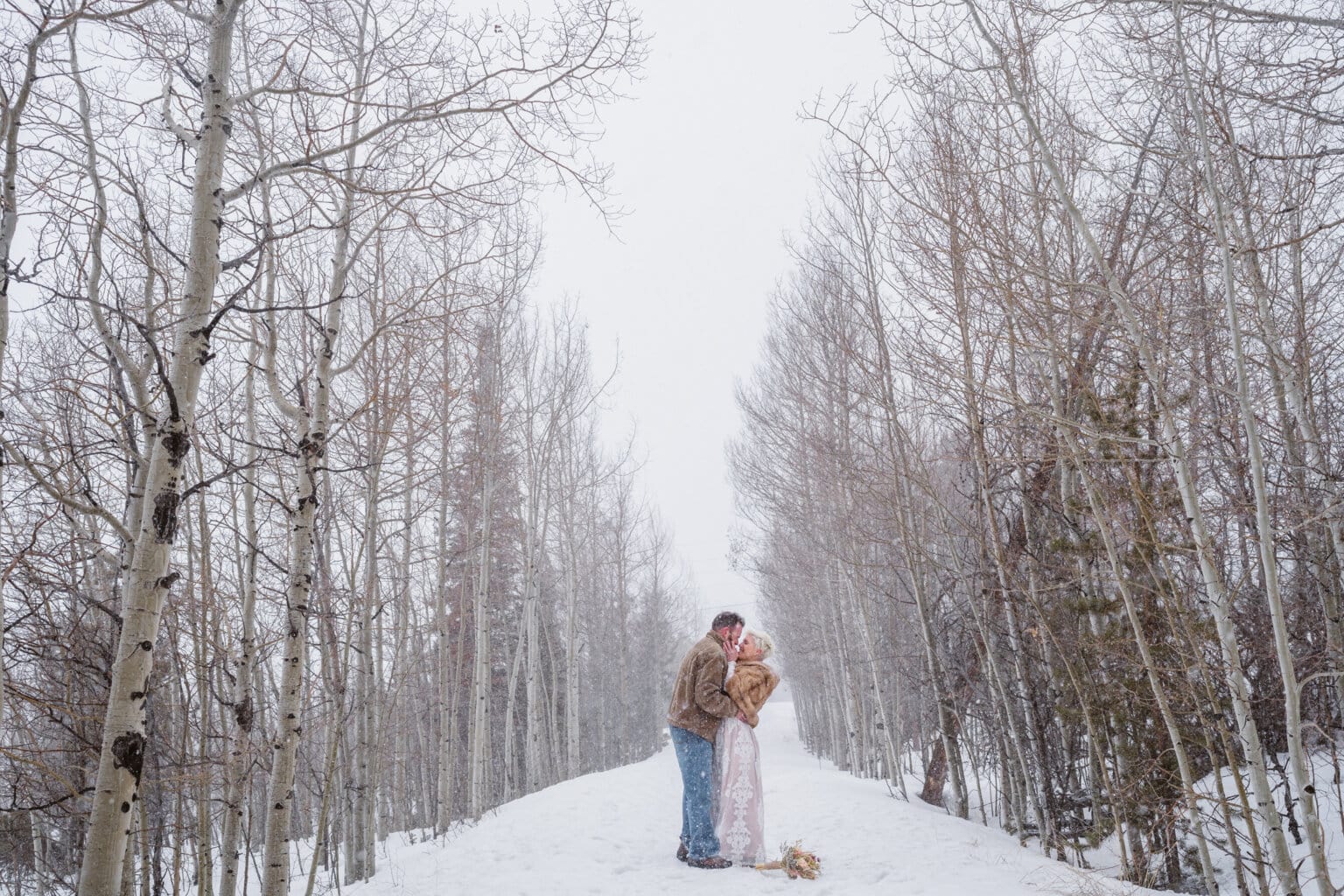
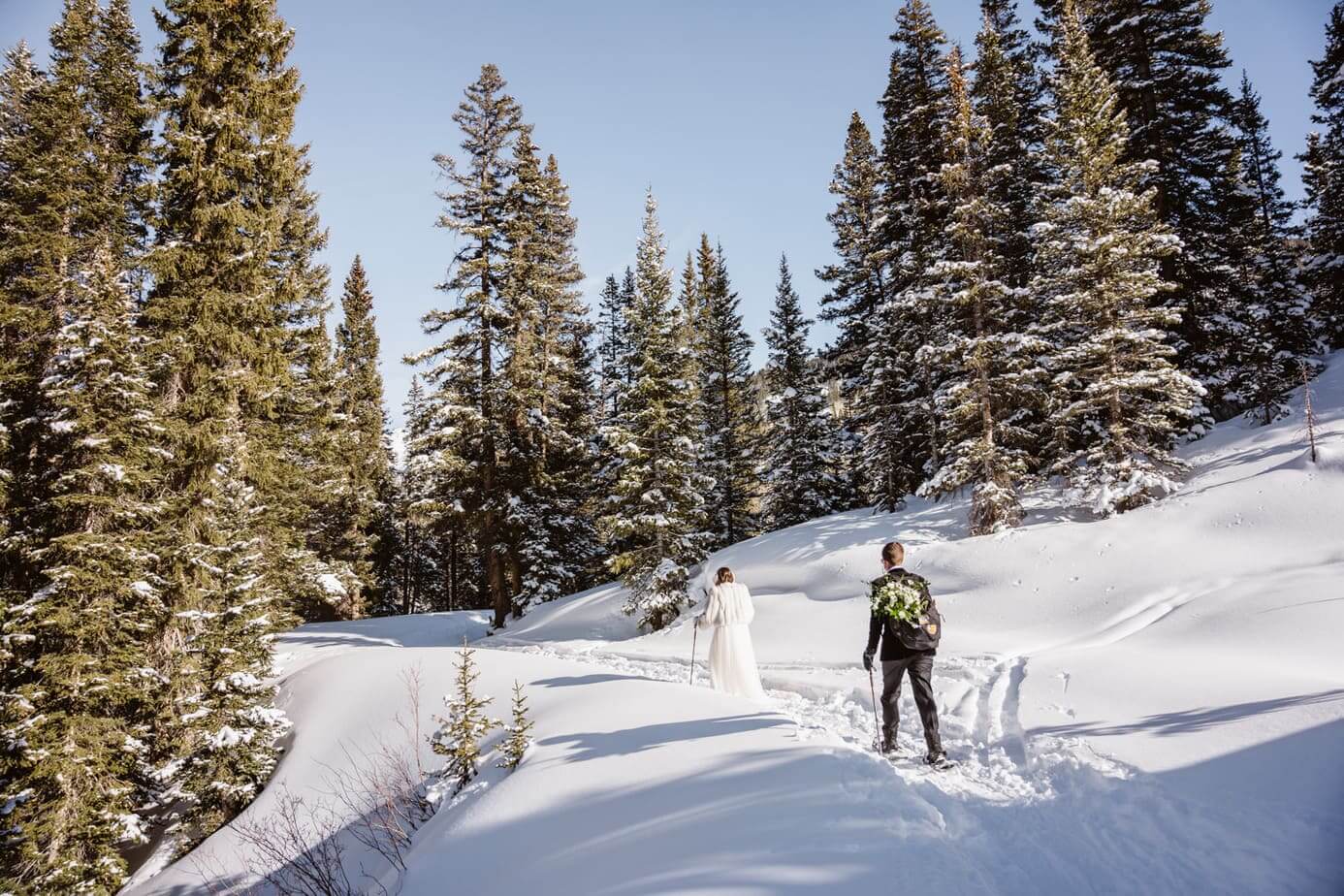
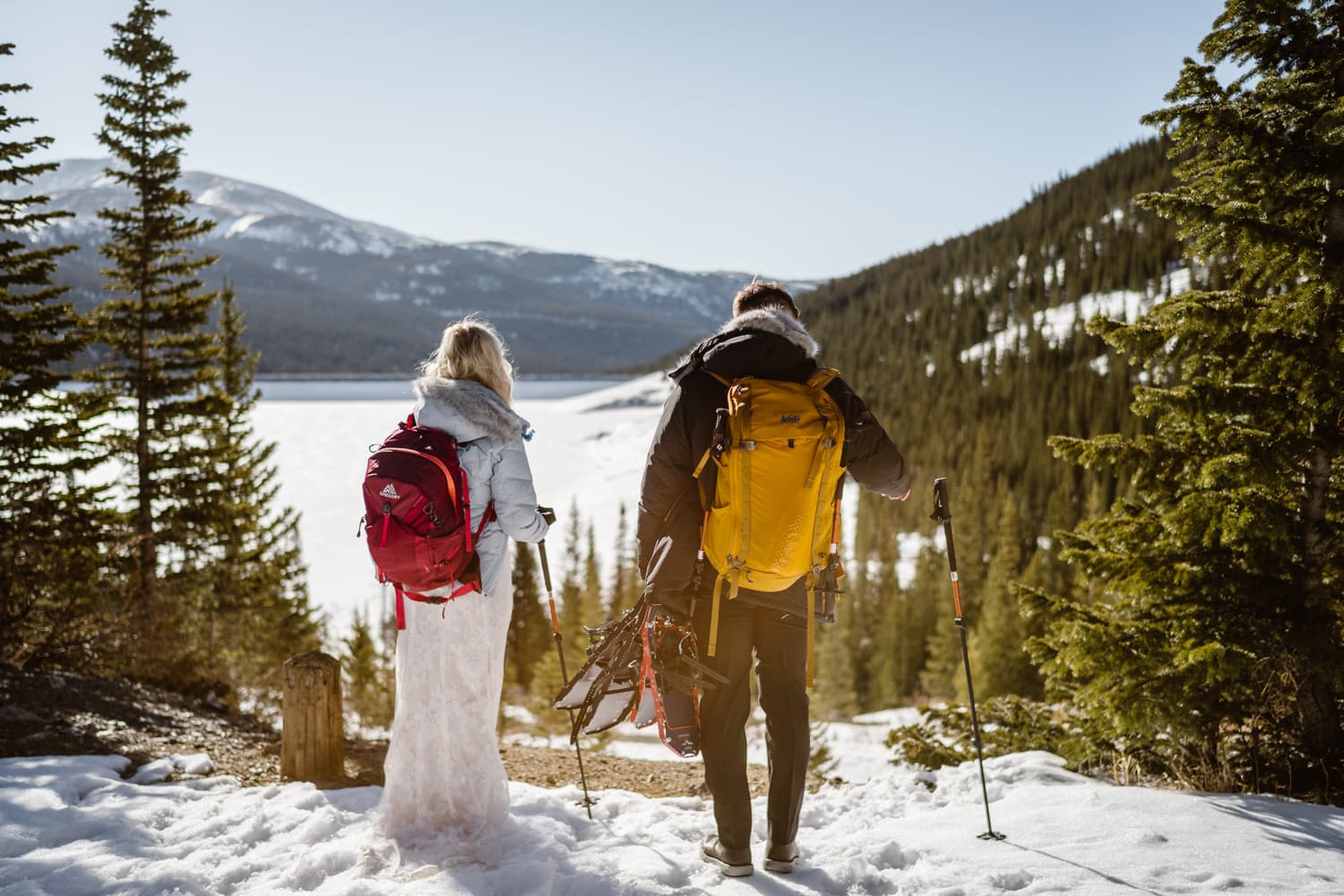
For those who prefer not to ski or snowboard, snowshoeing presents an excellent alternative to explore the valleys and meander among the aspen trees while the wind whispers around you. Numerous outdoor snow trails are meticulously maintained throughout the winter months, making snowshoeing an ideal choice for a winter elopement. Rest assured, I’ll ensure you’re securely strapped in before we venture onto those snowy trails!
Check out some snowshoeing spots!
• ICE SKATING
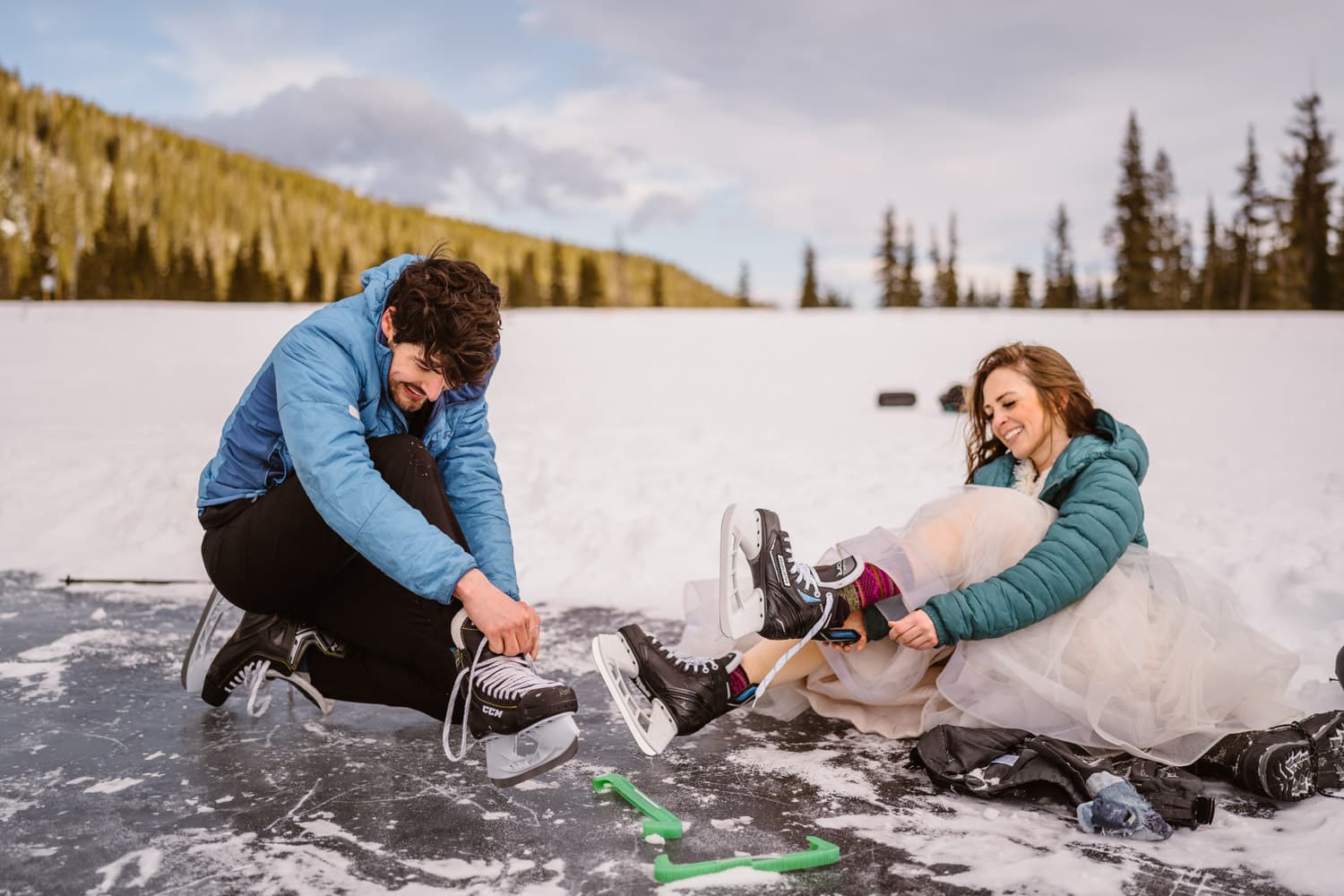
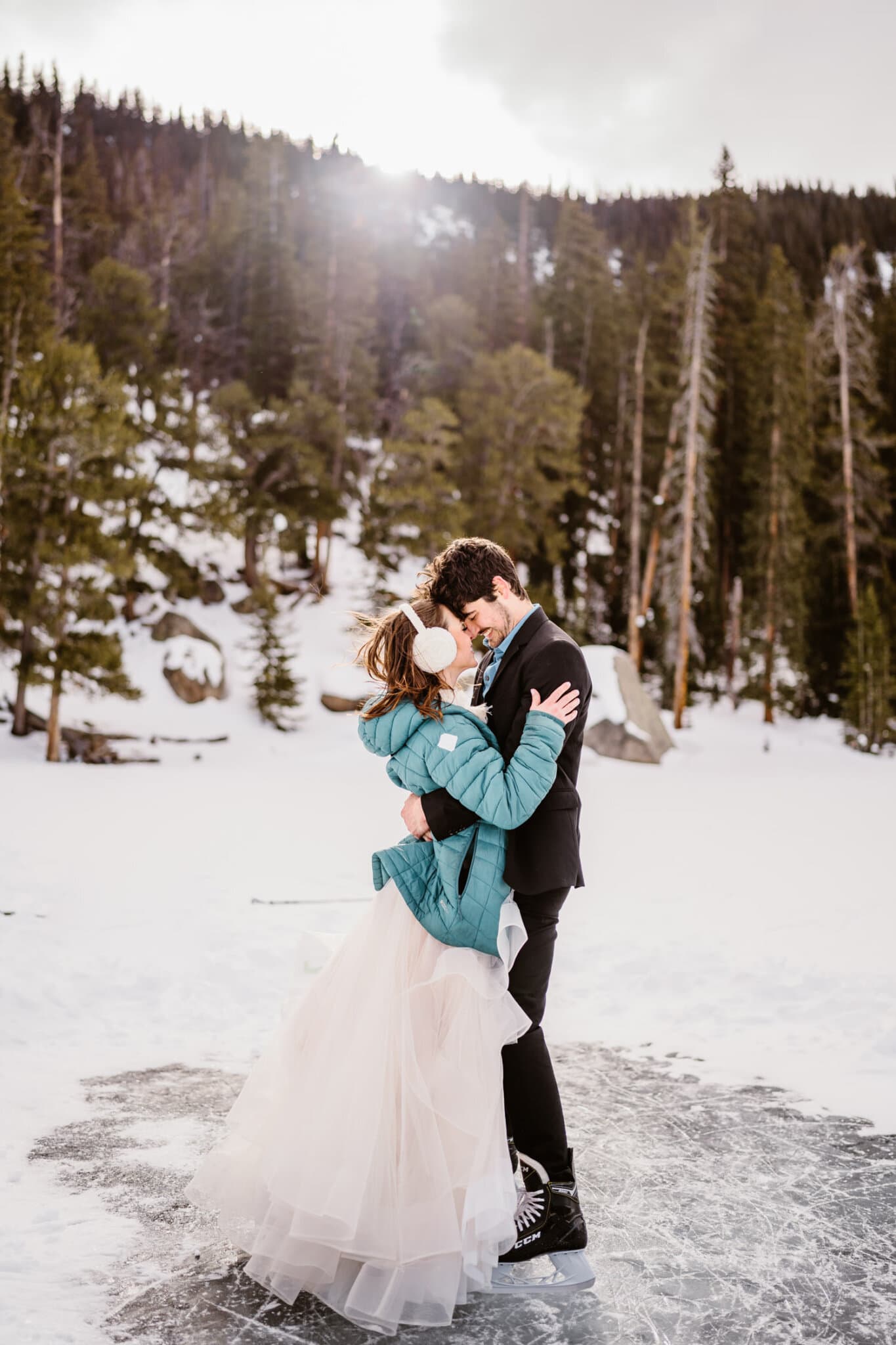
You don’t have to be an Olympic figure skater to have an ice skating elopement! This is definitely a unique and fun way to celebrate a winter elopement with your own personal ice skating rink out in nature. I really love this option because there are tons of frozen lakes in the winter to choose from and the pictures are so fun and unique compared to other things in the winter!
• HORSE-DRAWN SLEIGH RIDES
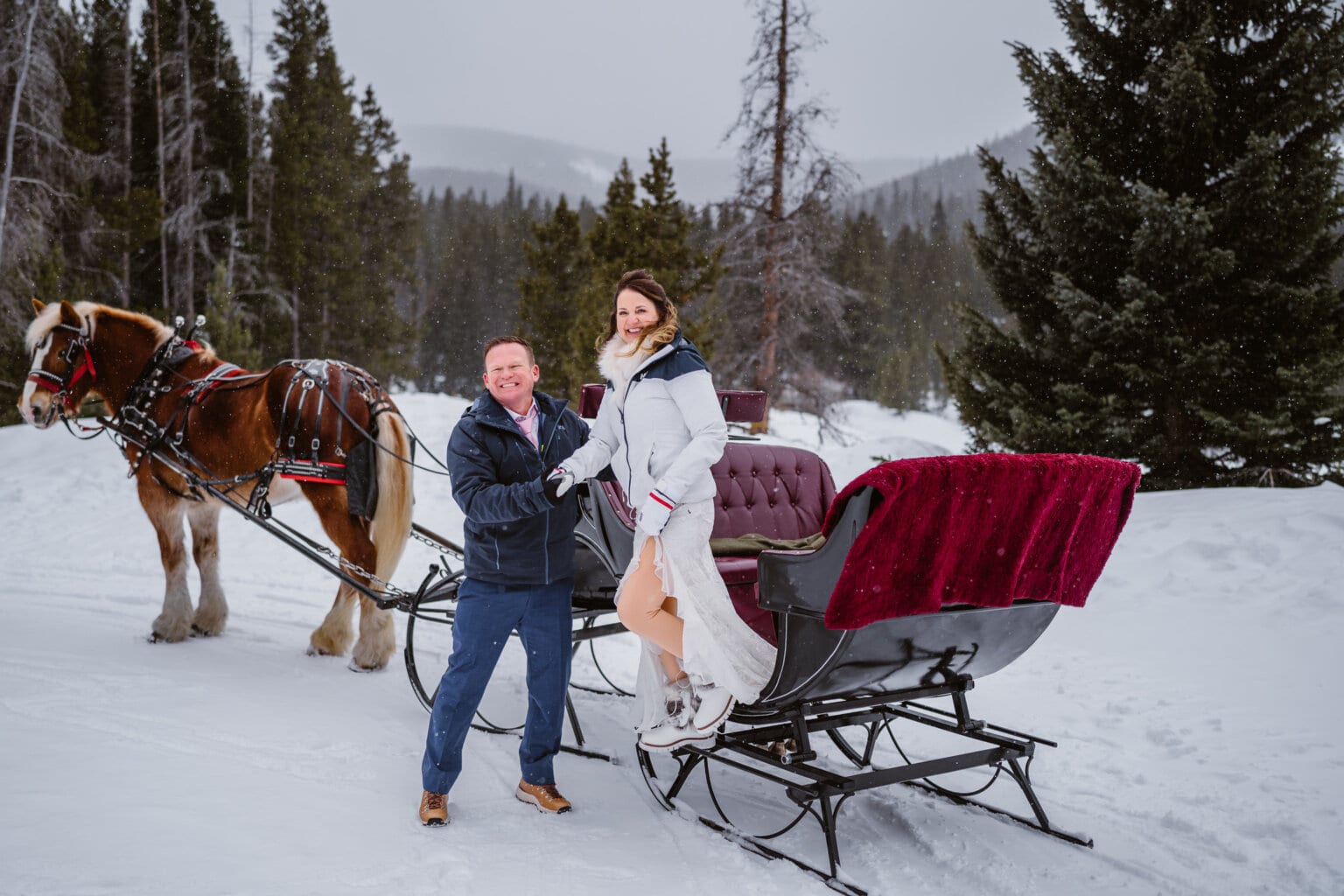
Snuggle up in a horse-drawn carriage and travel the old-fashioned way! This ain’t some boring circle around a track. Many places offer rides to see local scenery and wildlife, as you enjoy some hot chocolate and the sound of sleigh bells as you go. This might be the most romantic option of the bunch for your winter elopement, so kick pack warm, snuggle up close, and enjoy the jingle of bells tinkling from your sleigh!
You can check out some local sleigh rides here!
• DOG SLEDDING
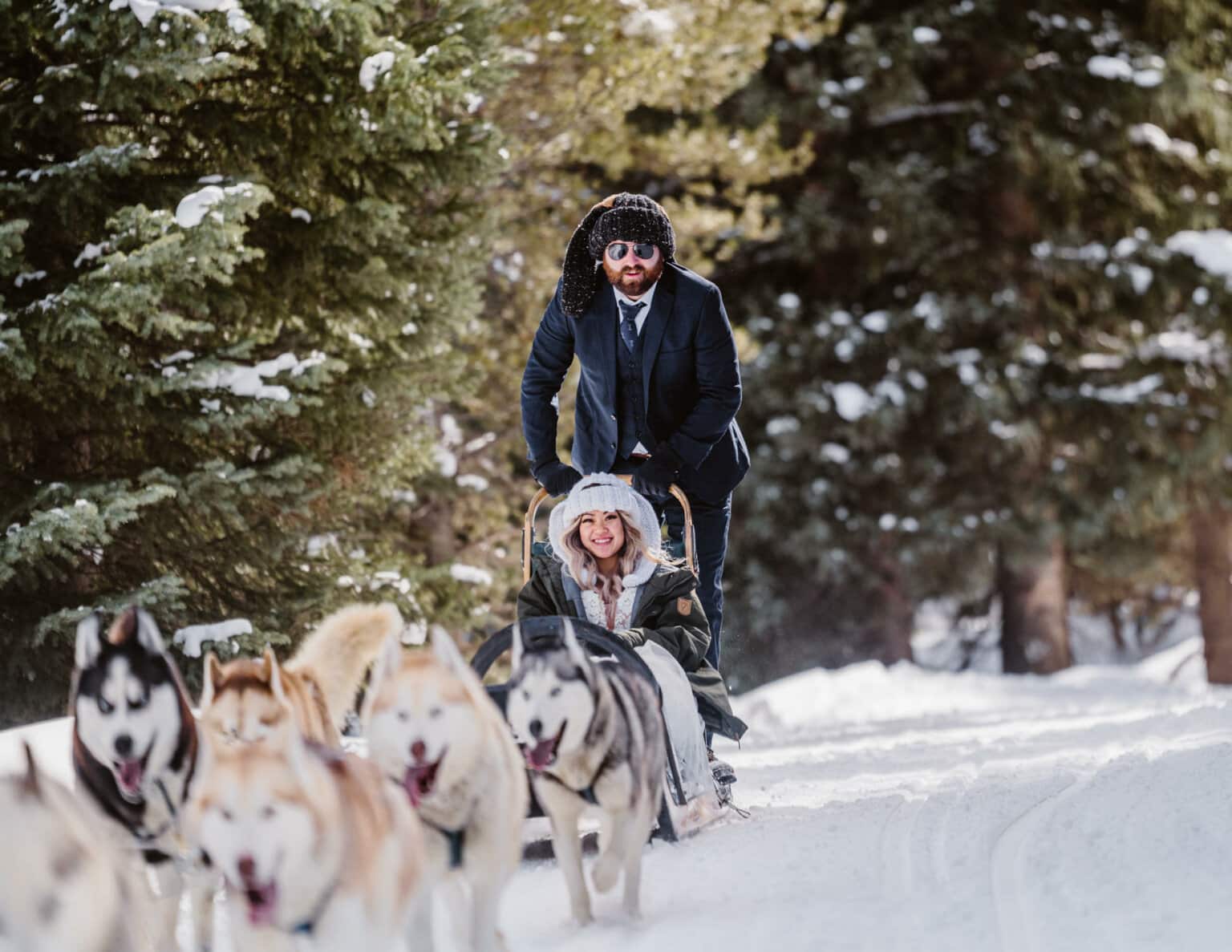
Dog sledding is totally rad and cranks up the thrill factor for your winter elopement. It’s not just about the ride – it’s about the intimacy and solitude that come with gliding through stunning winter landscapes. Imagine snuggling up with your partner as you’re whisked through the snow by a team of eager pups. It’s an epic adventure and a free pass to soak in the breathtaking scenery in the coolest way possible!
• SNOWBOARDING OR SKIING
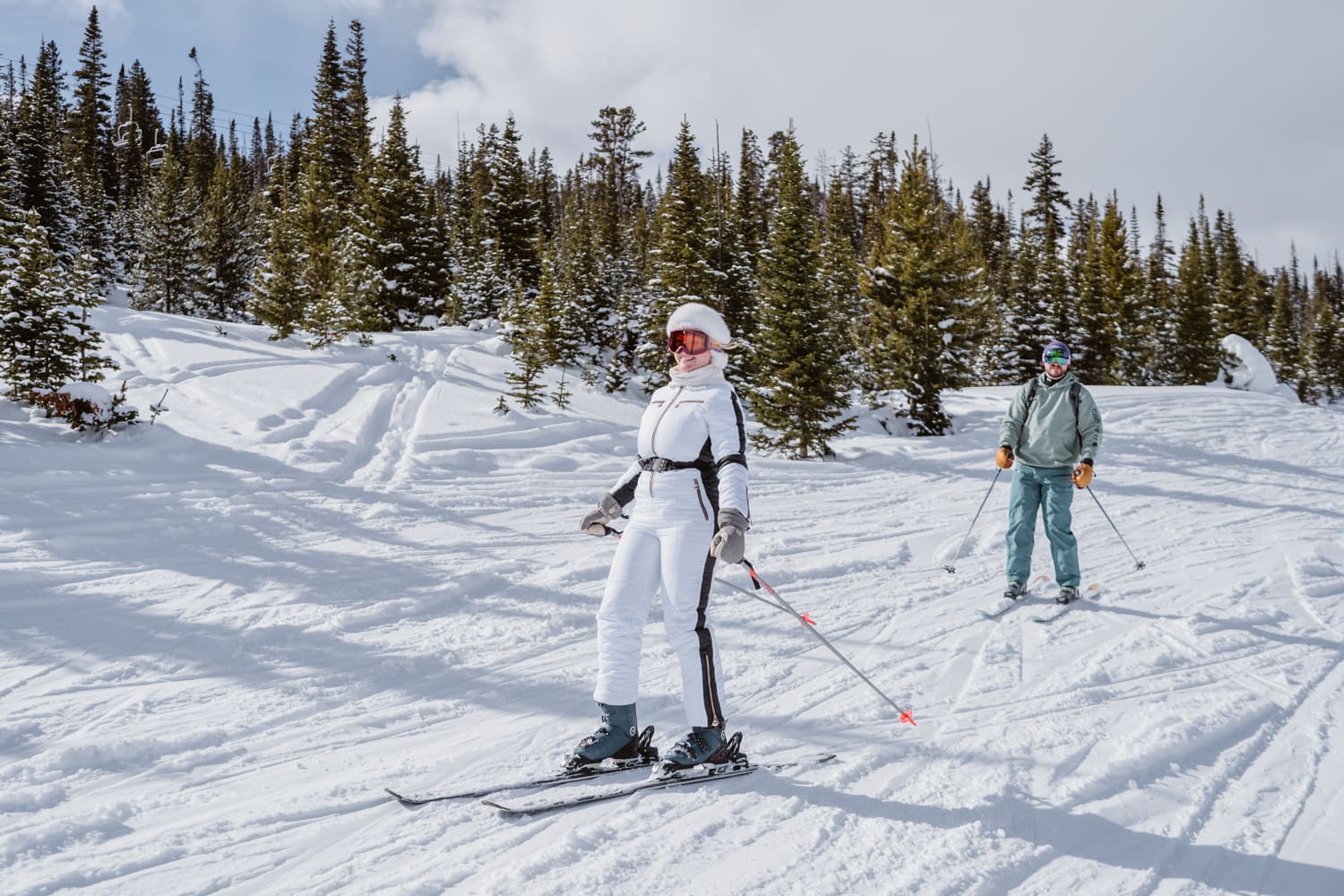
Ready to hit the slopes. Snowboarding is an amazing idea for some post “I do” adrenaline, and yes, you can totally shred in your elopement attire! I suggest planning your snowboarding adventure during the week so you can avoid the crowds and traffic of the weekend. You want to have the maximum amount of privacy and avoid sitting in ski traffic at all costs.
Added bonus: You can show off your skills on the slopes and snowboard out of the ceremony like a badass!
WHAT DO YOU WEAR TO A WINTER ELOPEMENT?
You don’t want to be freezing your butts off all day – so keeping the weather in mind when you shop for your elopement attire will ensure you can have a full day of adventures! You can also help keep each other warm by cuddling up in between photos, because who doesn’t love cuddles?
Another added bonus to eloping in the winter is you won’t have to deal with the summer heat. If you are stressed about being sweaty on your wedding day, then a winter elopement is perfect for you! You can embrace the snowy elements and cool off when needed!
Keep reading below for what you should consider wearing for your winter elopement.
• BEST WINTER BOOTS
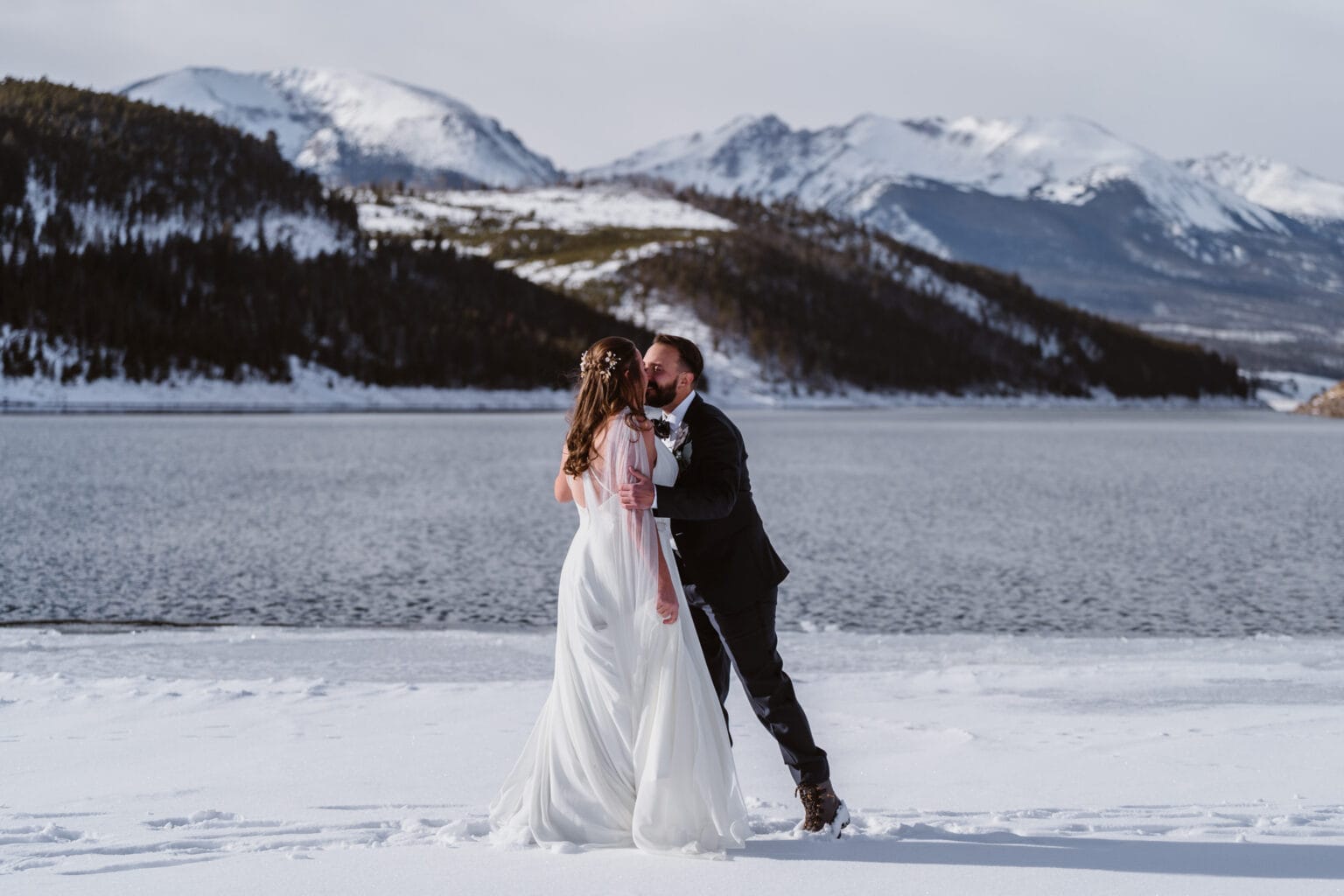
Ensuring warmth and dryness is crucial for winter elopements, making high heels and dress shoes super impractical, especially for snowy adventures. Opt for winterized boots, such as those made with Gore-Tex, ensuring they are waterproof. Additionally, pack several pairs of wool socks to change into throughout the day. Don’t forget to bring hand warmers and place them near your toes for added comfort – you’ll be thankful for the extra warmth!
If you get new shoes for the occasion, be sure to break them in before the big day! There’s nothing worse than a new-shoe blister. If your’e in line for deep snow, consider adding some snowshoes to keep you from sinking – Yaktrax will provide you traction for icy conditions. But most importantly, double-check that your boots are waterproof waterproof.
• WINTER ELOPEMENT DRESSES
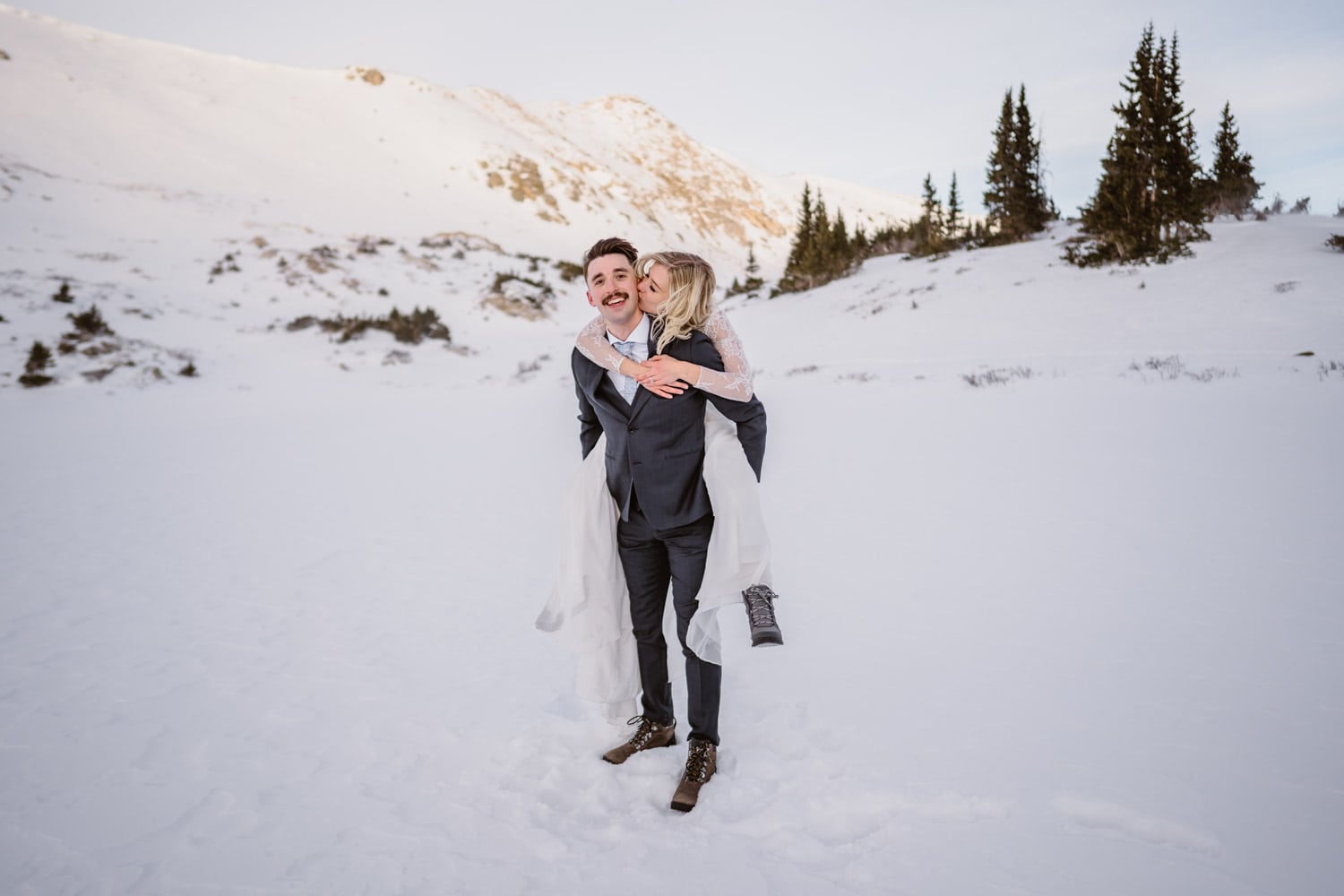
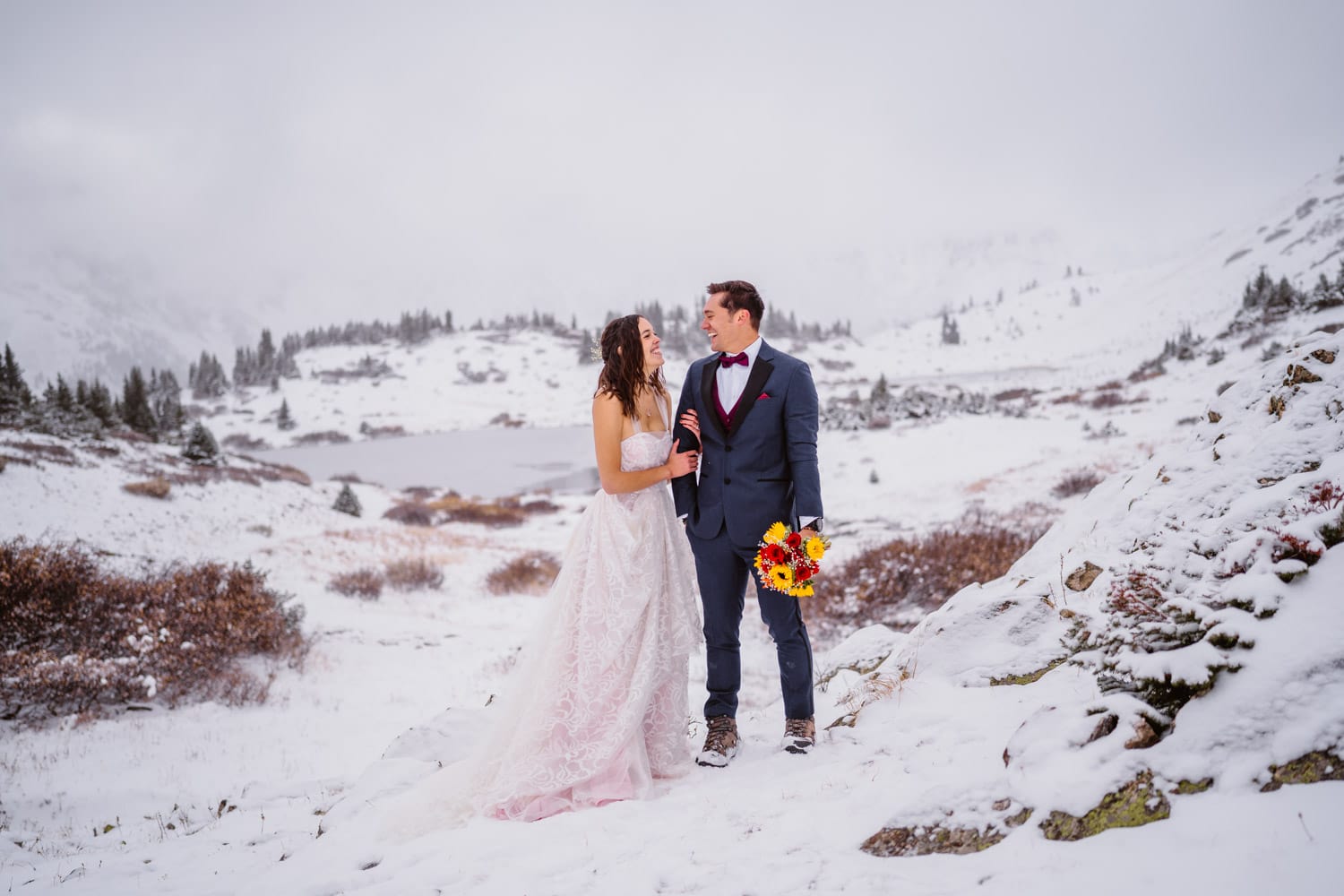
Mermaid style and ball gown dresses may work for traditional weddings, but on your winter elopement day, you’ll be hiking, snowshoeing, skiing, running away from snowballs lovingly hurled by your new spouse, and maybe even all of the above. You’ll need a dress that will let you do that! Make sure your dress is comfortable and allows you to move freely – so you can enjoy your winter elopement day.
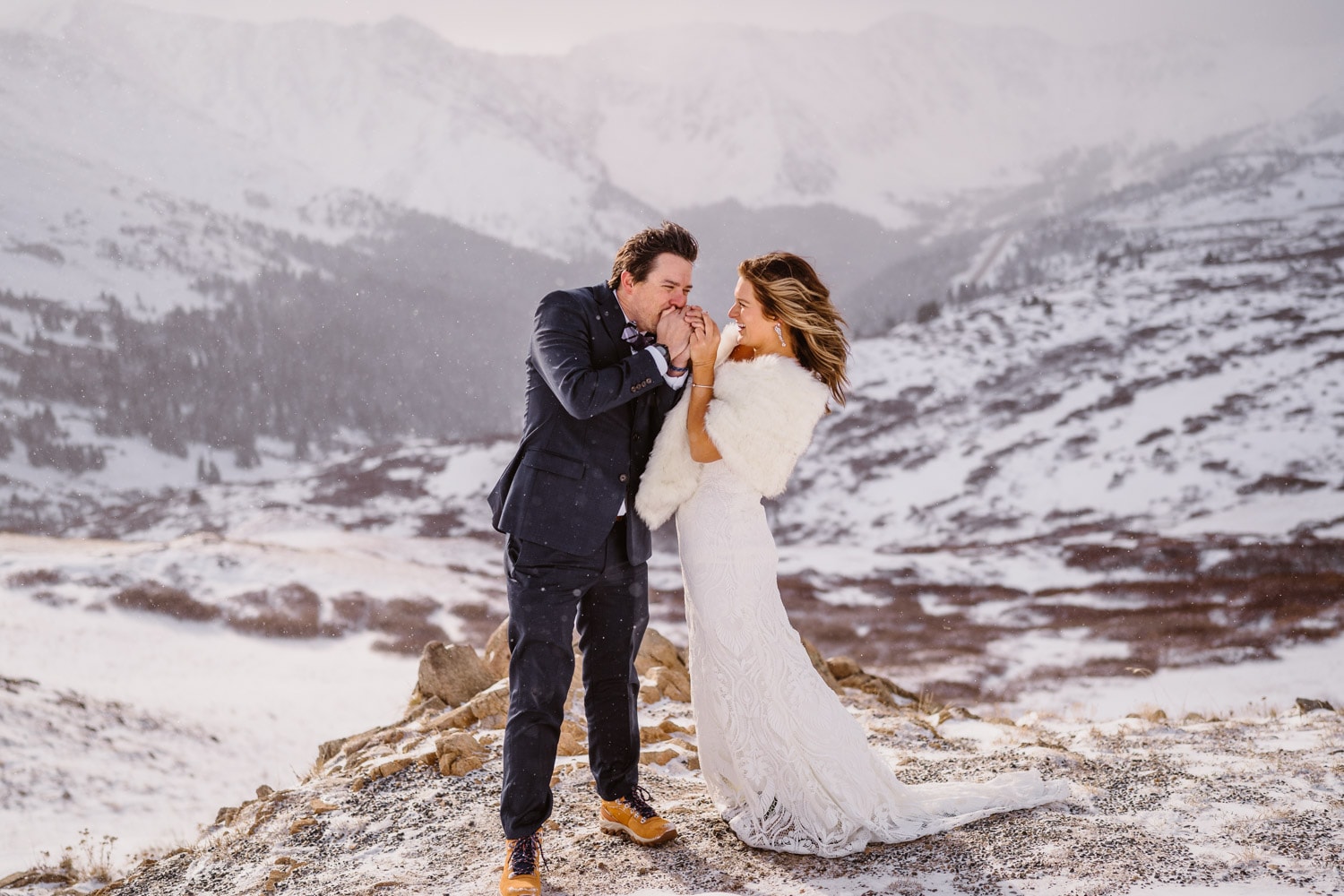
For a winter elopement, you’ll also really need to think about staying warm. Dresses with heavier fabrics (like velvet or silk) can help, along with a cape or shawl on top for warmth and dramatic flair. You can also throw some fur over the top if you aren’t keen on the snowboard jacket for your winter elopement!
But if you need something warmer than fur you can look at puffer coats or shearling-lined zip-ups for a top layer to keep you stylish for your winter wedding!
• BEST SUITS FOR ELOPING IN THE WINTER
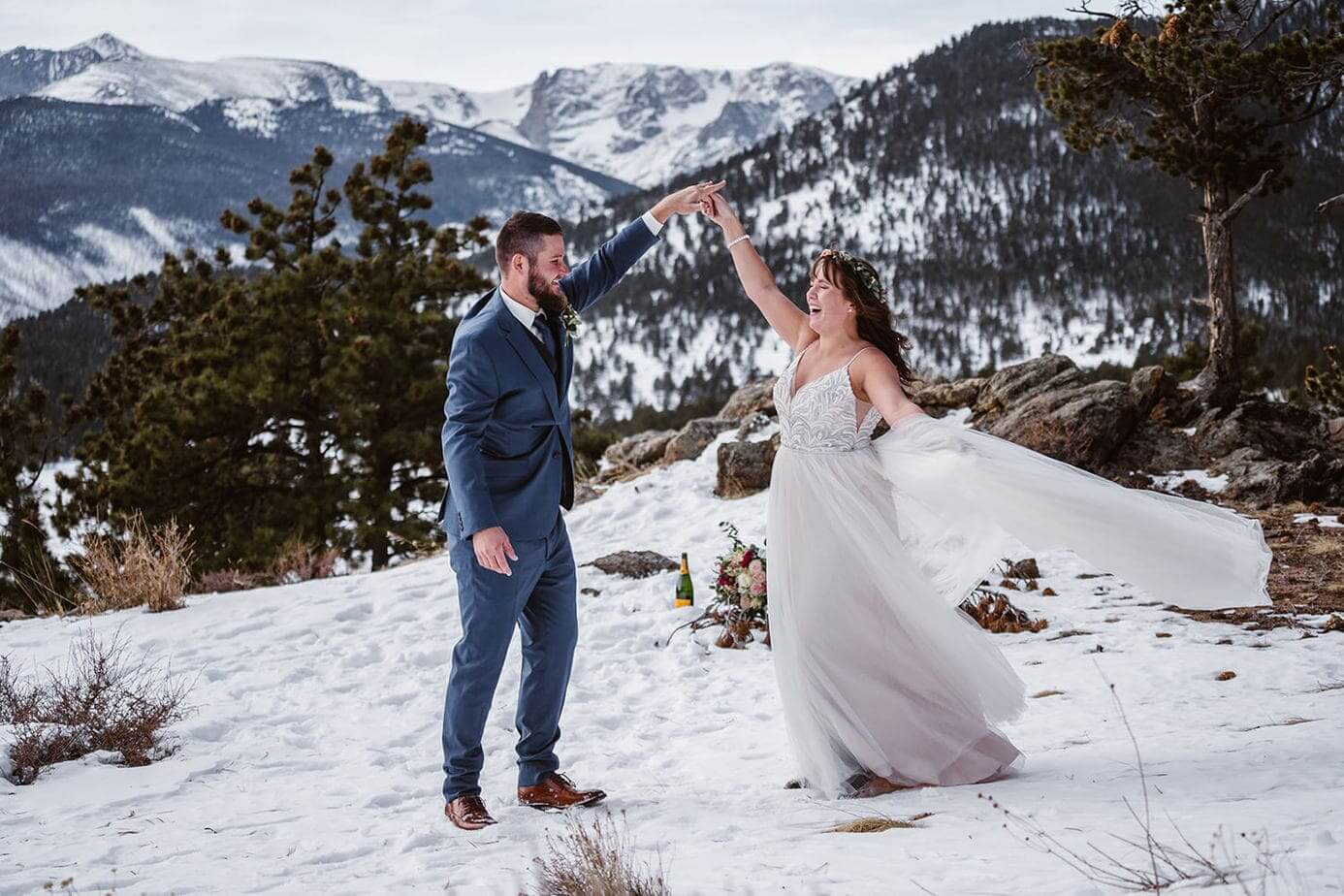
Similar to winter elopement dresses, your winter elopement suits should prioritize comfort and warmth! Ensure your suit allows for easy movement without risking any superhero-style rips through the jacket. Opt for heavier fabrics such as tweed, wool, and velvet to keep cozy, and suits offer versatility for layering. Don’t forget to consider layering underneath your suit for added warmth in winter conditions! Thermal underwear is a simple yet crucial choice to stay toasty during your winter elopement!
• WINTER SHAWLS
Rocking a fur shawl is not only a fun and cute way to elevate your winter bridal look but a great way to keep you warm in the elements. You can shop for affordable faux winter shawls on Amazon or other online retailers. I would suggest getting a darker-tone shawl so it doesn’t blend in with the snow too much!
• BEST ACCESSORIES TO WEAR IN THE WINTER
Your outdoor elopement attire isn’t complete just yet! While you may feel warm while trekking through the snow, the cold can quickly set in once you pause for your ceremony. It’s crucial to be ready, so I suggest layering up with some undergarments to keep you cozy. Nude leggings and thermal pieces are ideal, and don’t forget to pack cold-weather essentials like gloves, scarves, gaiters, and extra socks (wool socks are especially magical – they’ll keep you warm even if they get wet in winter conditions).
Additionally, I recommend bringing along hand warmers and perhaps a camping stove for a quick fix of hot chocolate or coffee on the move. After all, who can resist the allure of hot chocolate?
WHAT ARE THE BEST MONTHS TO HAVE A WINTER ELOPEMENT?
Planning a winter elopement has the added perk of less expensive travel and lodging, as most destinations are in their off-season. Travel and hotels are peaking in the summer when kids are out of school, so you can likely find some good deals for you to take advantage of for your winter wedding. However, the holidays can be an exception! The end of December may not be ideal for an elopement as you might run into holiday vacationers and crowding at a lot of locations, especially in ski towns.
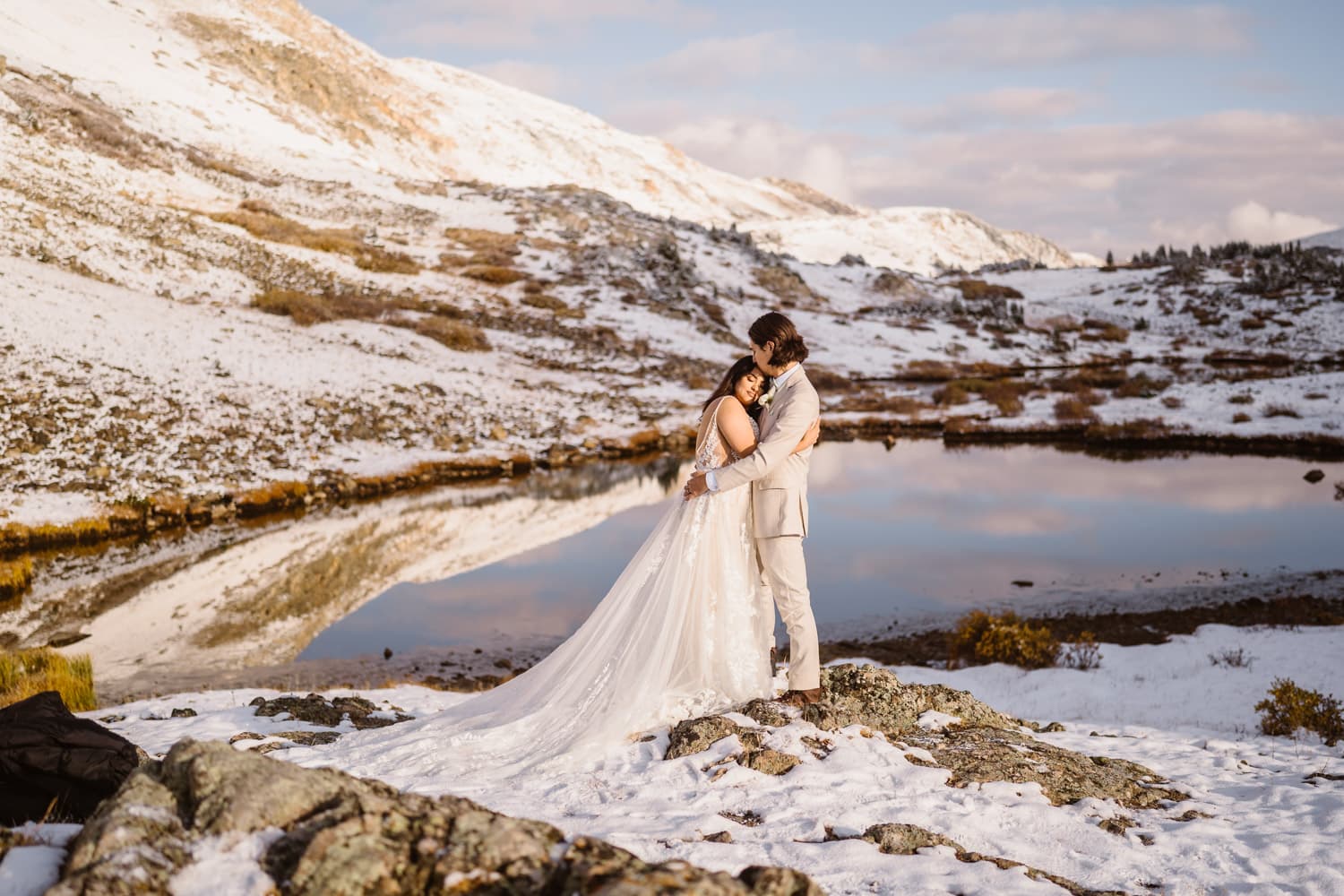
In high-elevation spots, you could have a winter elopement as late as April! Snow in the mountains usually sticks around until summer, and it will be a little warmer. I recommend January through April, but check the expected conditions for your winter elopement location! This is important because snowfall can start early or late depending on the year. The best bet is to plan your winter elopement during traditional ski seasons because they’re generally when the snow is the best and looks the prettiest.
WHAT IS THE WEATHER LIKE FOR WINTER ELOPEMENTS?
The shimmery ice crystals, freshly fallen snow, and wintry landscapes are beautiful, but winter elopements come with some added weather considerations. Especially in winter in the mountains, weather can be a lot more unpredictable this time of year, and getting stuck in a blizzard or an avalanche is probably not something you want for your wedding day. Make sure you’re prepared with safety gear and a backup plan, and that you know which roads will be open and which locations are safe to visit.
And always remember that winter brings lots of snow and cold temperatures for your winter wonderland elopement, so make sure to overpack warm clothing. I always recommend being over-prepared for conditions because you would rather be safe than sorry about your winter elopement.
The important thing to note: every photographer will handle weather differently but I personally leave the day before or after open in case of bad weather. This gives me and the couple flexibility to move things around if bad weather arises in the winter.
WHAT ARE THE PROS TO ELOPING IN THE WINTER?
• ELOPING IN THE WINTER IS UNIQUE AND DIFFERENT
Winter weddings have a distinct charm and ambiance. The snowy landscapes, twinkling lights, and cozy decor can create a romantic and enchanting atmosphere that sets your wedding apart from traditional spring or summer celebrations. Imagine sledding down a hill or cross-country skiing on your wedding day. You can’t get that in the summer months! You can put a fun and unique twist on your wedding day by eloping in the winter.
• YOU WILL HAVE MORE DATES TO CHOOSE FROM IN THE WINTER
Summer wedding dates get booked up to 12 months in advance! I know that is crazy to hear but eloping in the winter gives you the benefit of your choice in dates. You don’t have to worry about your favorite photographer being booked up in the winter months because it’s shoulder season for us. Enjoy your choice of dates during the winter!
• ELOPEMENT VENDORS MIGHT OFFER DISCOUNTS IN THE WINTER
Because it’s shoulder season for so many vendors, you will have an easier time finding vendors and venues that offer discounts on pricing. For example, I offer an avalanche elopement package in the wintertime that is for fewer hours than my summer packages. If you have a hard budget, then winter elopement might be a great option for you to save some money!
• WINTER WEDDINGS TEND TO BE CHEAPER
Not only will you find vendors willing to offer discounts, but you’ll notice that everything is generally cheaper when getting married in the winter. You will likely find shorter photographer hours and cheaper flights and you might be able to combine your winter wedding into a family holiday trip like with Christmas or Thanksgiving! Eloping in the winter is not only different and unique but potentially cost-saving as well.
• WINTE OFFERS A COZIER ATMOSPHERE
Winter weddings can create a cozy, intimate atmosphere indoors or outside, especially if you opt for a warm and welcoming venue, such as a barn or a ski lodge. You can bundle up next to a fire or soak in a local hot spring or hot tub after your big adventure outside!
WHAT ARE THE CONS TO ELOPING IN THE WINTER?
• WINTER WEATHER CAN BE UNPREDICTABLE
The most obvious downside to eloping in the winter is the weather and the shorter days. Not only is the weather cold but unpredictable as well. I really suggest being familiar with being in the cold for long periods of time. In the winter, the days are shorter and there is less daylight, which can impact the timing and location of your elopement.
• WINTER OFFERS LIMITED WORKING HOURS
As summer wraps up, the days get shorter and daylight retreats, offering you less time during the day to make magic. If you’re eloping in the winter, you’ll need to be timely and be mindful of natural daylight for your photos.
• WINTER TRAVEL CAN BE CHALLENGING
The journey to your winter wonderland start with your trust in the airlines — a venture not without its tribulations nowadays. Flights delayed by snowstorms in and out are the most common occurrences, so plan ahead and get into your destination at least two days beforehand.
WINTER ELOPEMENT PHOTOGRAPHERS
My name is Sean, and I can’t wait to help create your winter elopement! I’m a free spirit who has dedicated my life to exploring this wild world and connecting to the people in it.
I know firsthand what an important and personal decision this is—my wife and I eloped to Northern Ireland. You’re trusting me to capture this amazing day, and I make it my responsibility to make sure you have an incredible experience from start to finish!
My passion has led me here, where I can follow my heart and share my some of my favorite places to elope in Colorado. It’s truly an awesome experience, and I’m stoked every time I get to guide and document your day!
Sound like the perfect match? Reach out so we can get started on your epic winter elopement package!