
Yosemite Elopement Guide: Top Elopement Spots & Packages

Pull up to Tunnel View for the first time and something in your brain just stops. El Capitan on your left. Half Dome straight ahead. Bridal Veil Falls pouring off the wall to your right. It’s a lot to take in when you’re just passing through. Now imagine standing there in your wedding clothes with the person you love!
I’ve been shooting elopements in Yosemite since 2018. It’s one of the few places I keep coming back to year after year and it still does something to me every time. Yosemite is one of those rare places where even couples who’ve spent months planning go a little quiet when it finally hits them. Like, oh. This is real. This is actually happening.
This guide covers everything you need to pull a Yosemite elopement off. The best locations, the permits, the marriage license, and the stuff nobody bothers to mention in the generic guides. Let’s get into it.

“Sean knew spots in Yosemite that you wouldn’t even know were there. Most importantly for us, he made us feel comfortable and at ease. We had so much fun just talking to him about everything and anything, which helped us feel more relaxed when having to pose. If you’re not good with posing (I’m not), don’t worry, he will suggest poses for you. Our Yosemite turned out UNBELIEVABLE. Everyone loves them! Personally, I’m convinced he’s a magician. I don’t know how he does it, but he knows how to catch the perfect lighting at the right angle with a gorgeous backdrop, all while talking to you and making you feel like you’ve been friends with him your whole life!”

Yosemite Elopement Packages
Here’s what I offer. These are built around real days I’ve photographed in the park, with realistic timelines and honest recommendations for who each one fits best.

VALLEY VIEW PACKAGE
IDEAL FOR: Couples looking for an intimate and affordable Yosemite elopement package with iconic views and little to no hiking.
4 HOURS – A relaxed Yosemite elopement experience that keeps the day simple and meaningful.
PACKAGE IS ONLY FOR COUPLES ELOPING IN CURRENT YEAR
$4,700

MARIPOSA ELOPEMENT PACKAGE
IDEAL FOR: Couples craving a day Yosemite elopement with time to slow down and be present.
8 HOURS – Gives you the freedom to explore, share a first look, exchange vows, dance it out, and experience the full story of your day.
$6,000

SUNRISE & SUNSET PACKAGE
IDEAL FOR: Couples who are dreaming of an epic sunrise elopement in Yosemite Valley and capping it off at sunset exploring and star gazing.
12 HOURS – Majority of couples do sunrise at Glacier Point and do sunset at Taft with photos in the valley in between! Expect 10-12 total hours
$10,000
What Does Every Package Include?
Every Yosemite elopement package includes photography coverage, location recommendations matched to your hiking comfort and priorities, permit and map guidance, a custom day-of timeline, vendor recommendations for officiants, florists, and hair and makeup artists, and hands-on consulting from the first planning call through your final gallery delivery.
Here’s the full breakdown of what’s covered:
- YOSEMITE LOCATION IDEAS: I build an outline of the day around your preferences — hiking distance, elevation, scenery type, and the features that matter most to you. I’ve shot every major location in this park in every season and I know exactly which spots are worth the early alarm and which ones photograph better than they look in real life.
- YOSEMITE PERMIT AND MAP INFORMATION: After booking, I walk you through the entire permit process and help you lock in your ceremony site. Permits sell out, especially May through October, so this happens early.
- YOSEMITE VENDOR RECOMMENDATIONS: I have a network of Yosemite-based florists, officiants, and hair and makeup artists who know how to work in the park’s unique conditions. These aren’t random Google results. They’re vendors I’ve worked alongside on real days here.
- YOSEMITE ELOPEMENT TIMELINE: I build a full timeline that maps out the entire day around light, locations, logistics, and the moments that matter. The goal is that you never have to check your phone once.
- YOSEMITE WEDDING CONSULTING: I’m involved from the first inquiry through your gallery. Location, permits, vendors, timeline, logistics — all of it. You show up and experience your day. I handle the rest.
Videography, florals, officiant fees, and hair and makeup are not included in the base packages but I can connect you with trusted vendors for all of it.

What are the best Yosemite elopement locations?
The best Yosemite elopement locations are Taft Point, Glacier Point, Sentinel Dome, Cathedral Beach, Tunnel View, El Capitan Meadow, Yosemite Falls, and Bridal Veil Falls. Each one offers iconic views of Half Dome, El Capitan, and Yosemite Valley. The right spot depends on the season, your vibe, and whether you want to hike to get there.
Here’s the thing about Yosemite elopements. Everyone shows up knowing the Instagram spots. But the park has corners that don’t get nearly the attention they deserve. I know where they are because I’ve been scouting this park for years and I’m not shy about using them. Quiet meadows below El Capitan, cliffside overlooks where you won’t see another soul, spots I’ve found on early morning walks before a shoot that I now build entire days around. Here’s my honest breakdown of every major wedding location in Yosemite.
Before we jump into the individual locations, let’s talk about what ties them all together: the permit system. Every wedding ceremony in Yosemite National Park, regardless of size, requires a special use permit from the National Park Service. The current fee is $150, which covers your ceremony at one of the 13+ designated ceremony locations for up to two hours. That permit is non-refundable and specific to your chosen site, so you’ll want to be certain about your spot before you apply. Here’s something most couples don’t realize until they’re deep in the planning: the park does not issue permits on holiday weekends. You’ll also want to know that Glacier Point ceremonies are simply not available in July or August, full stop. Work with an experienced photographer who knows the permit system and it becomes genuinely straightforward. If you’re just starting to wrap your head around the bigger picture, my full Yosemite National Park Elopement Guide walks through the entire process from application to “I do.”
Here’s my honest breakdown of every major wedding location in Yosemite:

Taft Point
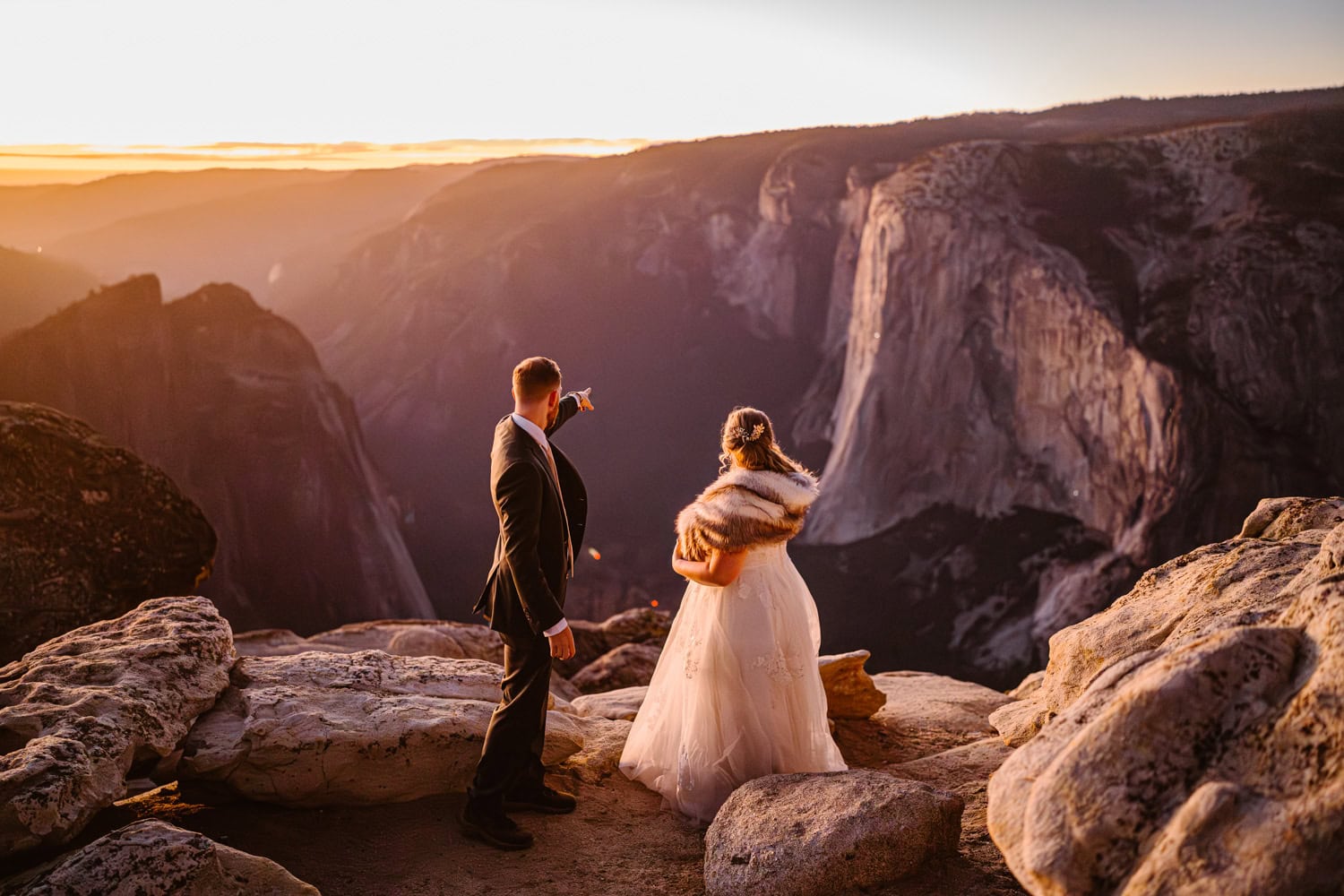
Taft Point sits on a 3,500-foot cliff with El Capitan and the whole valley laid out in front of you. This 2.2-mile round-trip hike takes about an hour each way, and the ceremony is capped at 10 people. Best for sunset, spring through fall.
I shot a close friend’s elopement up here and watched the last light of the day hit El Capitan: pink, then gold, then gone. The fissures in the granite near the overlook are dramatic and a little dizzying, which is part of what makes this spot feel so alive. You’ll want to stay a solid 10 to 15 feet back from the edge, especially in wedding attire. The wooded approach through the forest on the way up sets the mood beautifully, filtering the light and building anticipation before the valley opens up in front of you.
One logistical note that matters: Taft Point and Sentinel Dome share the same trailhead parking lot off Glacier Point Road. That lot fills up fast on summer afternoons. A weekday ceremony or a sunrise start solves the problem, and the light at sunrise over the valley is frankly just as good as sunset, just with fewer people. If you’re the kind of couple who wants a big view without the crowds that come with Glacier Point’s bus access, this is your spot.
Glacier Point
Glacier Point is the move if you want Half Dome front and center with all the logistics handled for you. It offers drive-up access, paved paths for accessibility, and an amphitheater that can hold up to 50 guests. Best for sunrise, and the road typically opens late May and closes in November when snow hits.
Want to earn it? In early spring, before the road opens to vehicles, you can hike the 9.6 miles up from the valley under the stars and have the whole point to yourselves at sunrise. I’ve met couples at this trailhead at 3:30 am who came in wondering if we’d all get along and left feeling like we’d been friends for years. There’s something about climbing 3,200 vertical feet together in the dark that strips away the nerves.
Check the current NPS wedding permit page for the most up-to-date seasonal restrictions. If you’re planning a sunrise ceremony here (which I strongly recommend), headlamps and a 4am alarm are part of the deal. The payoff is having Half Dome glowing in that first light with maybe one or two other people in sight.

El Capitan Meadow
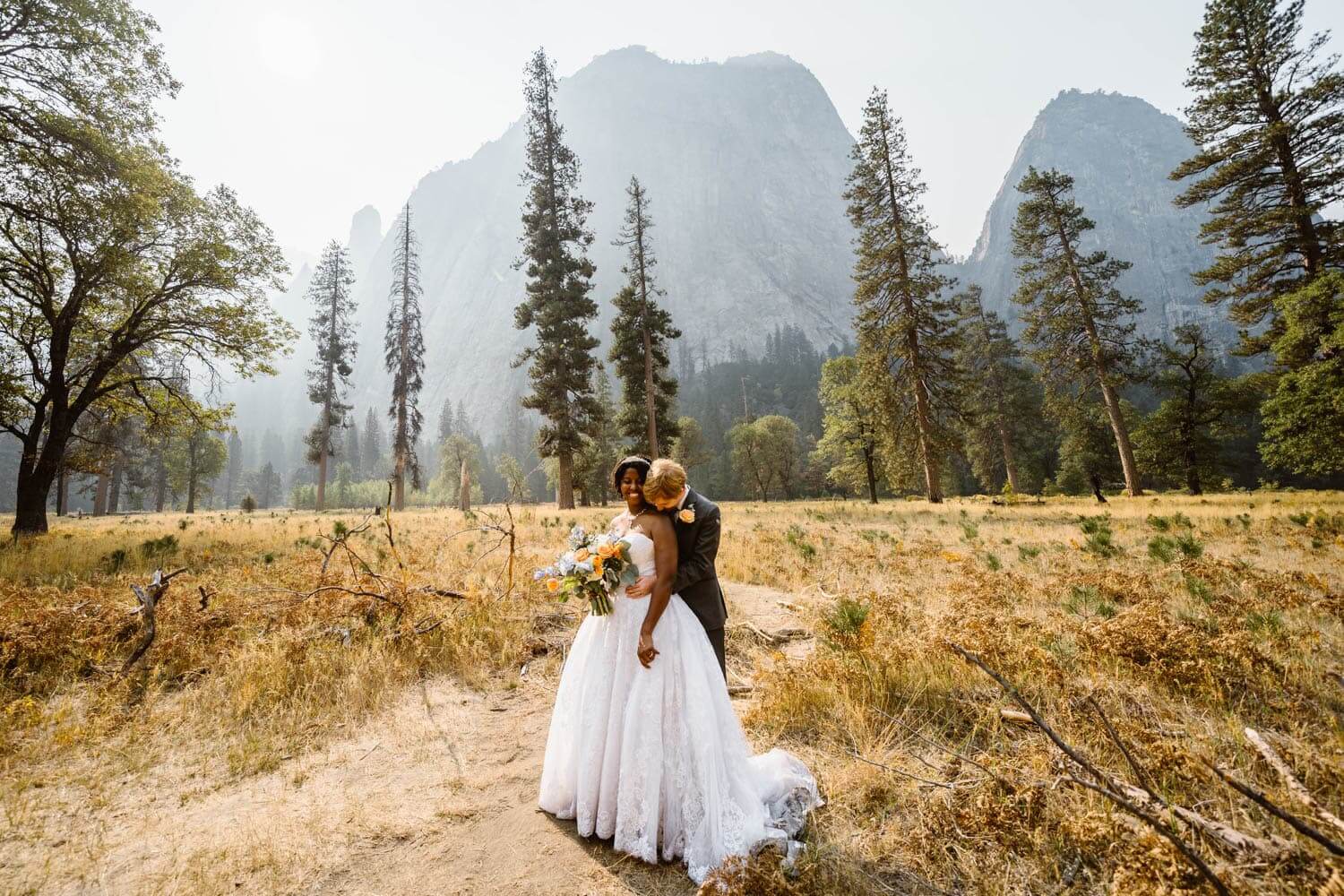
El Capitan Meadow is where couples go to slow down. Granite walls rise on all sides, climbers inch their way up the rock above you, and the wide open grassy meadow gives you room to breathe. It offers some of the best views of El Capitan anywhere in the park.
Most of my couples picnic here, watch climbers work their way up the wall with binoculars, and just sit with it for a while before we move on. I’ve spent probably 50 afternoons in this meadow over the years. It never gets old, and it’s still the spot I recommend when couples tell me they want to slow down and actually feel the day. The meadow shifts with the seasons: bright green in late spring, golden and dry in late summer, and absolutely stunning when the cottonwoods turn yellow in October.
One thing I’ve learned shooting here repeatedly is that the light does something different depending on where you stand in the meadow. The western edge catches that backlit, glowy look in the evening. The eastern side gives you more even light and a cleaner line of sight to the Nose route on El Capitan. I usually walk couples around both options and let the light decide. If you’re the type who wants ceremony moments mixed with candid, unposed time together, this meadow is hard to beat.
Cathedral Beach
Cathedral Beach has some of the best unobstructed views of El Capitan in the park and enough space to accommodate up to 50 guests, making it one of the more flexible ceremony locations in Yosemite Valley. It works particularly well in fall when water levels drop and the beach opens up.
Timing matters here. Spring can bring high water that cuts into the beach, sometimes swallowing the usable ceremony space entirely. Fall is my personal favorite version of this spot. The water drops, the beach expands, and you can get out far enough that the whole granite wall fills your frame. Bring binoculars. Watching climbers on the wall after your ceremony is one of those Yosemite moments that sticks with you.
The Merced River runs right alongside the beach, so your ceremony backdrop is this layered scene of water, sand, pines, and then El Capitan rising 3,000 feet above it all. Sound-wise, you get the river instead of road noise, which matters more than you’d think when you’re saying your vows. For larger elopements with family present, Cathedral Beach is one of the few locations that doesn’t feel cramped with a group, and the parking area is close enough that guests with mobility concerns won’t struggle.

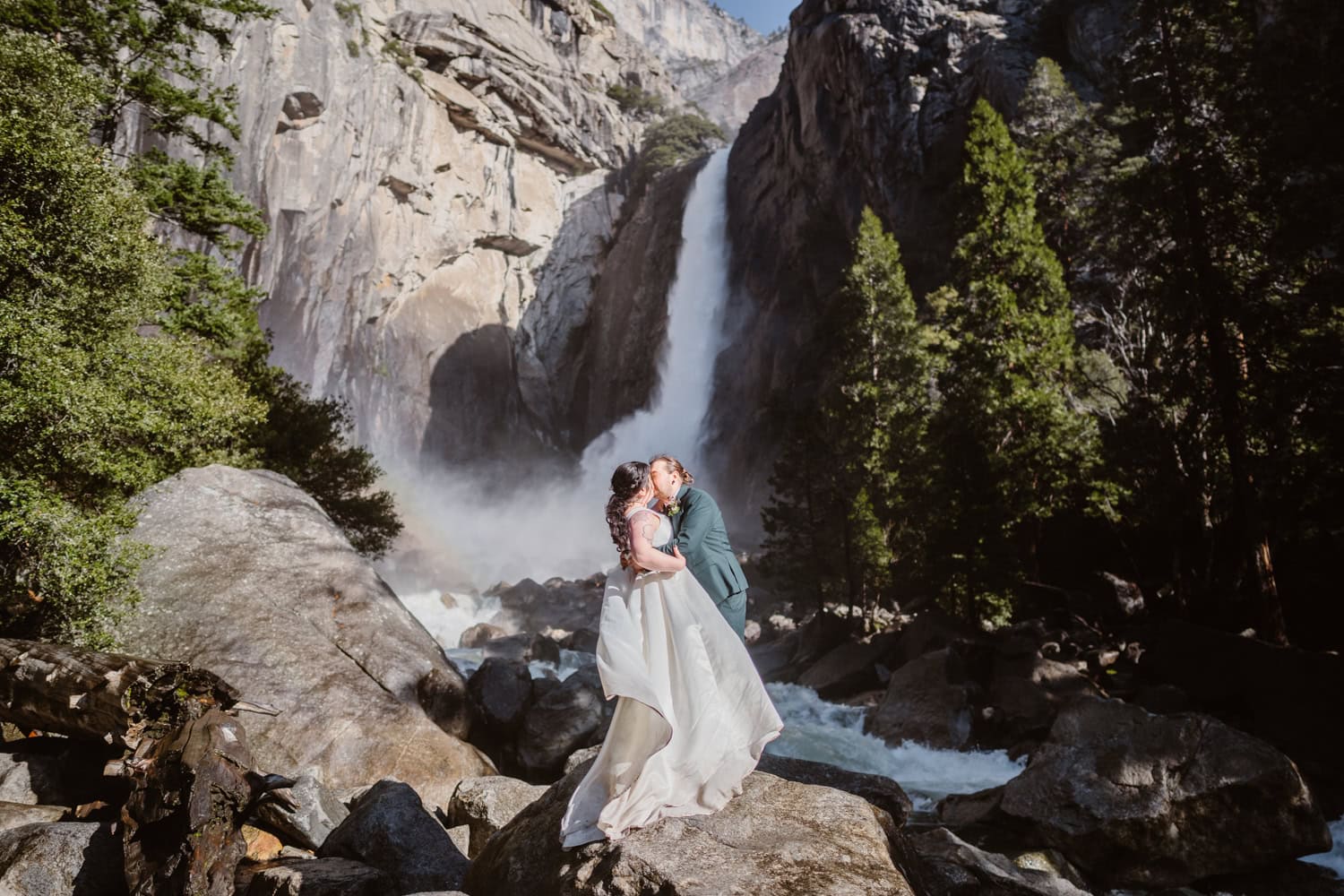
Yosemite Falls
Yosemite Falls is the highest waterfall in the park at roughly 2,425 feet total, according to the National Park Service, and it earns every bit of that reputation in spring when snowmelt pushes it to full force. It’s also one of the most accessible ceremony spots, located right off the valley floor near Yosemite Valley Lodge.
When it’s running hard, the sound alone is unreal. You feel it in your chest before you even round the corner on the approach trail. That accessibility is a genuine advantage if you’re bringing guests or just want something close to home base without a long pre-ceremony hike. The lower falls area has paved paths and plenty of viewing angles.
One thing to know: by late summer the falls can slow to a trickle or disappear entirely, especially in drought years. If the waterfall is the whole point, plan accordingly and aim for April through early July. Peak runoff typically happens in May and June, and that’s when Lower Yosemite Fall puts on its most dramatic show. I’ll sometimes position couples on the footbridge for a wide shot that catches the full height, then move in closer for the intimate stuff with the mist and the roar filling the background.

Bridal Veil Falls
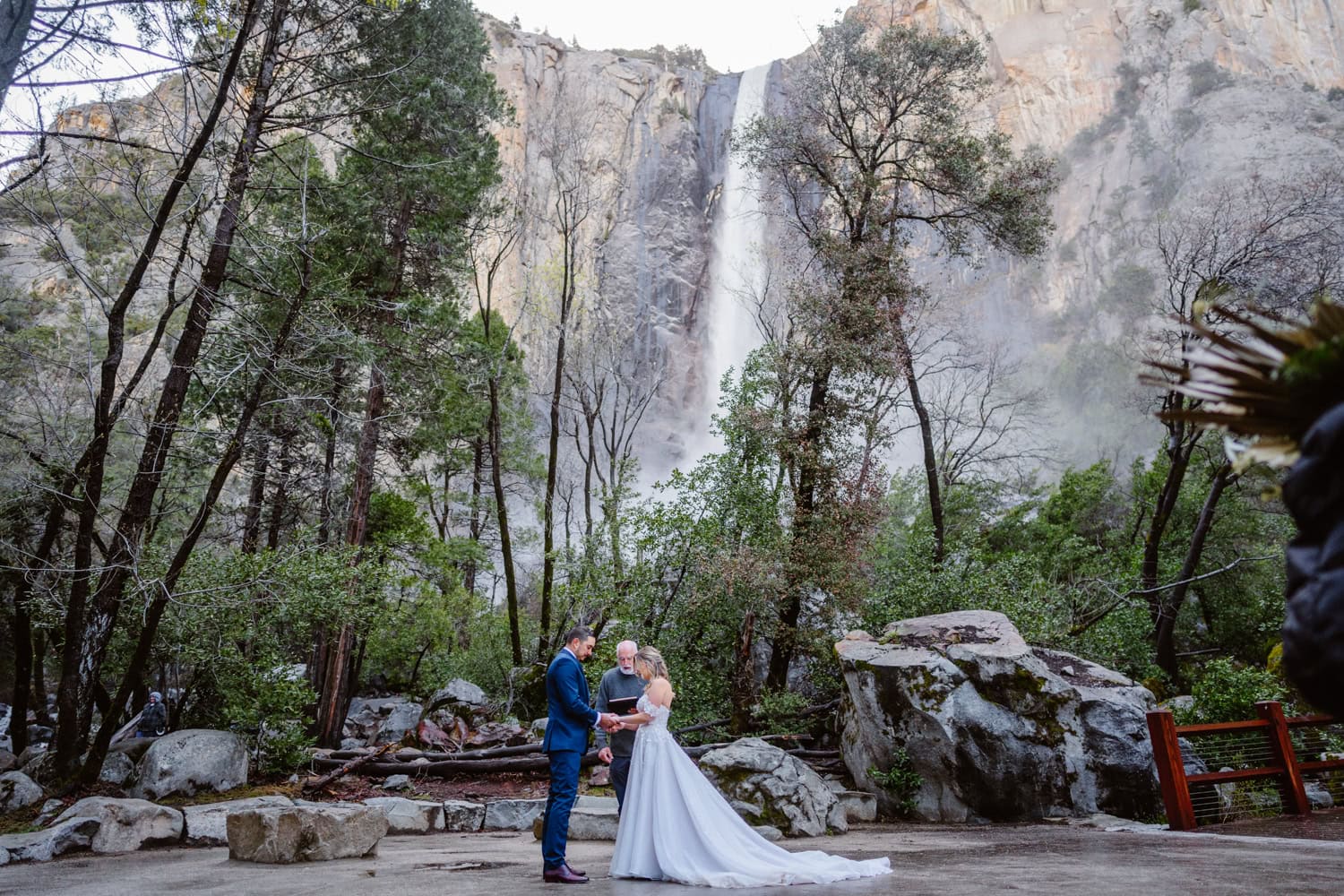
Bridal Veil Falls is the first major waterfall most people see driving into Yosemite, and it honestly never loses the wow factor. There’s a wooded area just below the falls that feels tucked away and intimate despite being close to the road.
Fair warning: you will get misted. Embrace it. I usually time this one for midday or early afternoon when the sun hits the falls directly and the light does something really special: this diffused, bright glow that wraps around you. Early summer is peak water volume and peak magic.
The trail to Bridalveil Fall underwent a major renovation that was completed in late 2024, significantly improving accessibility with a widened paved path, new viewing platforms, and better parking. The work took longer than initially projected (it was not finished in 2023 as earlier reports suggested), but the result is one of the most visitor-friendly waterfall experiences in the park. Check the current conditions page on NPS.gov before your visit to confirm trail status. For a deeper look at making this waterfall the centerpiece of your day, I’ve got a dedicated Bridal Veil Falls Elopement guide that covers permits, timing, and the best exact photo spots below the falls.
Tunnel View
Tunnel View is the iconic Yosemite panorama: El Capitan on your left, Half Dome straight ahead, Bridal Veil Falls to your right. I’ve set up shoots here probably 40 times and it still stops me, but it’s not the right call for a ceremony location.
By 9am Tunnel View is packed, and you’re sharing your moment with tour buses. I use it exclusively for first looks and quick portrait sessions timed around 6am when the light is soft and the parking lot is mostly empty. Get in, get the shot, move somewhere quieter for your ceremony. That’s the play.
The composition is so classic that couples sometimes assume it’s the obvious ceremony choice. I get why. But the viewing area is a wide stone wall with a parking lot directly behind it. There’s no privacy, no quiet, and no way to block out the steady stream of visitors who (understandably) want to see the same view. If the Tunnel View shot is on your must-have list, we build it into the timeline as a sunrise portrait stop, then head somewhere with space and solitude for the actual vows.

Sentinel Dome
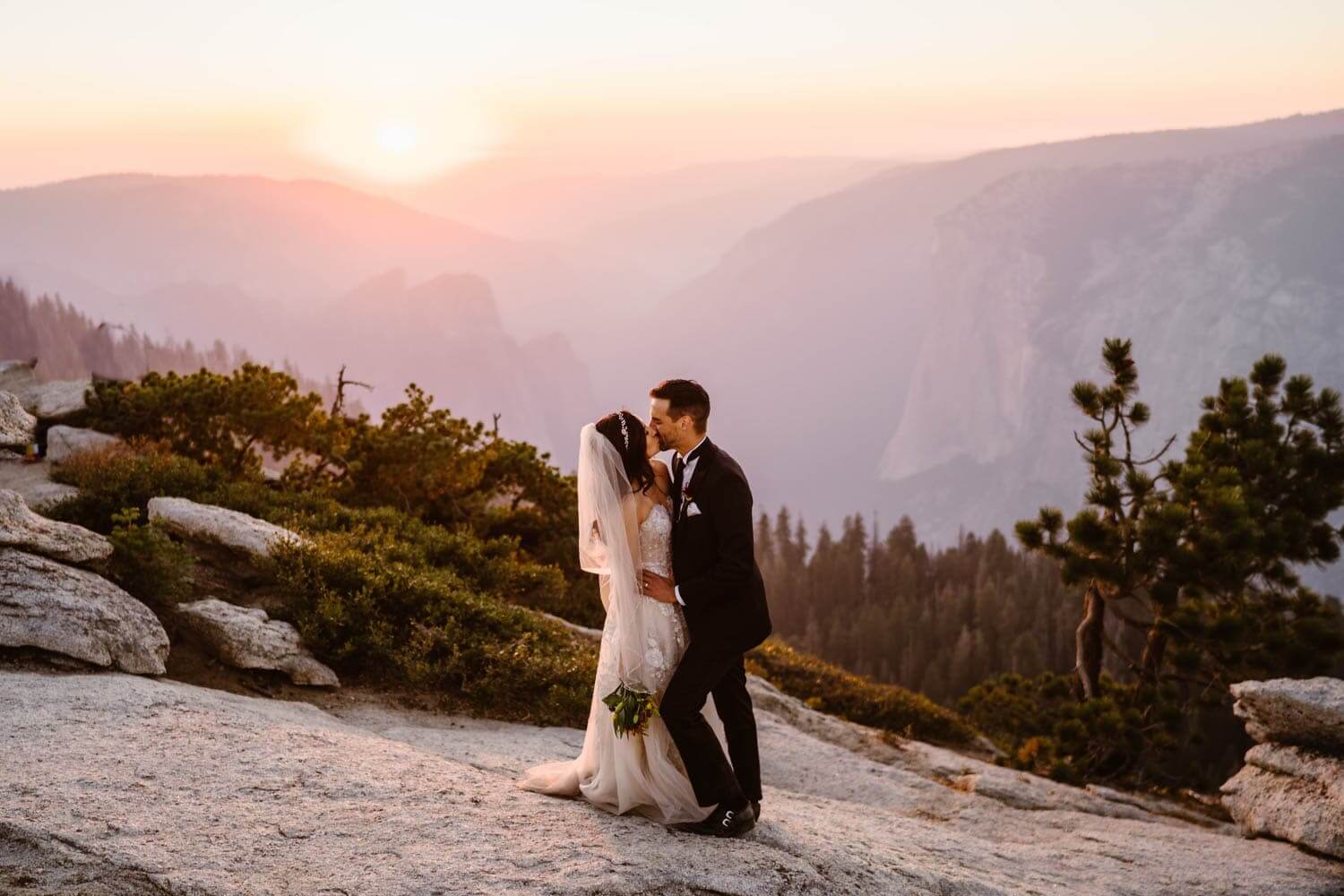
Sentinel Dome gives you Glacier Point-level views with fewer people: a full 360-degree panoramic from the summit, reached by a relatively short half-mile hike from the same parking lot that serves Taft Point. The summit feels quiet even on busy weekends.
I’ve shot ceremonies up here on Saturday mornings in October with nobody else around. It’s my first recommendation when couples want that high-elevation, above-it-all look without the Taft Point scene. The dome itself is a granite hump that’s easy to walk up, and the view stretches from Yosemite Falls to Half Dome to the high country peaks in every direction.
The hike is short but steep in sections, and at elevation (the dome tops out around 8,100 feet), you’ll feel it more than you expect. Give yourselves time to catch your breath at the top before the ceremony. The summit is bare granite, so there’s no shelter from wind or sun. A sunrise ceremony means calm air and soft light. Midday up here can be harsh, both for photos and for comfort. One last thing: the Jeffrey pines on the summit, including the famous windswept tree that Ansel Adams photographed, add texture and framing that you don’t get at Glacier Point.
Swinging Bridge Picnic Area
Swinging Bridge is one of those spots that rewards people who actually do their research. In spring when Yosemite Falls is going full send, this area absolutely glows. I like timing it before midday when the sun starts pouring into the valley and everything lights up at once.
It holds up to 20 guests, the vibe is relaxed and open, and it doesn’t carry that packed tourist energy that some of the more obvious spots do. Parking is tight so get there early if you’re bringing a group.

Do you need a permit to elope in Yosemite?
You apply for a Yosemite wedding permit through the National Park Service’s Special Park Use permit system. The fee is $150, it covers your ceremony at one of 13+ designated locations for up to two hours, and you should apply at least 90 days ahead of your date. Permits require the officiant to be listed and cannot be transferred between locations.
Here’s what you need to submit with your application:
- Completed special use permit application
- Paper check for $150 made out to “Yosemite National Park”
- Your preferred date and backup date
- Your chosen location and guest count
- A brief description of your ceremony plans
The application itself lives on the NPS Yosemite weddings page. You’ll fill out a form specifying your preferred date, location, number of people (ceremonies are capped at varying limits depending on the site), and officiant information. The park’s permit office reviews applications on a first-come, first-served basis, so earlier is always better.
Here’s what trips people up: the permit is for a specific location at a specific time. If you fall in love with Taft Point and the Taft Point permits are gone for your date, you can’t just show up at Cathedral Beach and call it good. You need a new permit. Same goes for dates: holiday weekends are completely off the table. No exceptions. The park does this to manage the crush of general visitation, and it’s non-negotiable. If your dream date falls on Memorial Day weekend, Labor Day weekend, or the Fourth of July, you’ll need to shift your date or choose a location outside the park boundary. Once you’ve got the permit logistics sorted, the next big piece is your timeline. I’ve mapped out exactly how the day flows in my Yosemite Elopement Timeline guide, from permit-check to sunrise portraits to that post-ceremony picnic.

When is the best time to elope in Yosemite?
The best time to elope in Yosemite depends on your priorities. Late May through June delivers peak waterfalls and lush greenery. September through mid-October offers stable weather, fall color, and dramatically fewer crowds. Winter elopements (December through March) bring snow-dusted granite and near-total solitude, though road and trail closures limit location options.
Every season has a real argument for it. Here’s the honest breakdown:
- Spring (April to June) is my personal favorite time to shoot here. Waterfalls running hard, valley is green, light is soft and golden. The tradeoff is that some high-elevation roads including Glacier Point Road are still closed in April and early May, and rain is possible. If Yosemite Falls or Bridal Veil Falls are on your must-have list, this is your season.
- Summer (July to September) means peak crowds. The park has been running vehicle reservation systems during high-demand periods since 2020, so check current entry requirements well in advance. Everything is open and accessible. But some falls have dried up and you’re sharing your moment with a lot of other people. I’ve shot summer weekends in Yosemite Valley where the parking lots were full by 7am. Weekdays only in peak season, and arrive before the gates open. The difference between a Tuesday and a Saturday in July is not subtle.
- Fall (September to November) is genuinely underrated. Crowds thin out, light gets warmer and more directional, valley takes on golden tones. Glacier Point Road typically closes in November so if that’s your spot, aim for September or October. For couples who want the views without the summer circus, fall is the answer. October in Yosemite is genuinely one of my favorite months to shoot anywhere. The light is warmer, the valley is quieter, and the park feels like it exhales after summer. If your dates are flexible, this is the window I’d target every time.
- Winter (December to March) is for the adventurous. Most high-elevation areas are inaccessible but the valley floor under snow is stunning, and you’ll have it nearly to yourselves.

How do you get a California marriage license for Yosemite?
You get your marriage license from any county clerk’s office in California; it does not need to be from Mariposa County where Yosemite is located. The license is valid for 90 days, there is no waiting period after issuance, and you must have at least one witness present during the ceremony in addition to your officiant.
California makes the marriage license process refreshingly simple compared to many other states. You and your partner both show up in person at a county clerk’s office with valid photo ID. You fill out an application, pay the fee (which varies by county but typically runs between $70 and $115), and walk out with your license the same day. No blood tests, no residency requirements, no waiting period. You can marry five minutes later if you want.
A practical tip: don’t wait until you arrive in Yosemite to handle the license. Many couples grab theirs from their home county in California a few weeks before the elopement date, or fly in a day early and hit the Mariposa County Clerk’s office in the morning before heading into the park. The Mariposa office is in the town of Mariposa, about an hour’s drive from Yosemite Valley. Check their official website for current hours and fees. Keep in mind that California requires at least one witness beyond the officiant to sign the license. That witness can be your photographer, a friend, or even a friendly hiker you’ve just met. If you’re traveling without guests, confirm with your photographer ahead of time that they’re willing to sign, and bring a backup plan just in case.

What time of day is best for a Yosemite elopement?
Sunrise at Glacier Point or Taft Point is the best time of day for a Yosemite elopement. The granite walls that make the valley so dramatic also block early light from reaching the valley floor. Up on the rim, the sun hits directly. Golden, warm, already raking across Half Dome before most tourists have had coffee.
Most guides skip over this. The valley floor doesn’t get real sunrise light the way higher elevation spots do. The sun has to clear the walls first, Here’s how I think about it by location:
- Glacier Point and Taft Point: Sunrise is the money shot. Arrive well before first light. Headlamps required, not optional. The reward is those two spots almost entirely to yourselves.
- Valley floor locations (El Capitan Meadow, Cathedral Beach, Sentinel Beach): Late afternoon into sunset. The light pours over the rim in the last hour before dark and the valley goes completely warm. The NPS also recommends before 10am for ceremonies to minimize crowd interference, so early morning works here too even if it’s not the true sunrise experience.
- Tunnel View: Sunrise only. It’s a tourist magnet by 9am, full stop.
The 10am to 2pm window at popular spots is when the park is at its most chaotic. Build your day around avoiding it and you’ll have a completely different experience.
Things should you know for your Yosemite elopement
Permits and locations, most guides have that covered. Here’s the stuff that actually catches couples off guard when they’re standing in the park:
- No permits on federal holidays or holiday weekends. Plan your date accordingly.
- No arches, no chairs, no decorations. Nothing installed or placed. The landscape is the decor. Honestly, that’s the whole point of doing this here.
- No amplified music. Acoustic instruments are fine if they stay under 60 decibels at 50 feet. Always confirm with NPS if you want live music.
- Baby’s Breath is banned. It’s an invasive species. NPS prohibits it in the park. Tell your florist before they build your bouquet, not after.
- No formal receptions in picnic areas. Keep post-ceremony food casual.
- Cell service is nearly nonexistent. Download offline maps the night before at the hotel. Both road maps and trail maps. Takes 30 seconds and saves you 20 minutes of standing in the parking lot staring at a spinning loading wheel on your wedding morning.
- Park entrance fees still apply to everyone. Your permit doesn’t cover entry. Every car in your group pays the $35 vehicle fee. Grab an America the Beautiful annual pass if you’re hitting multiple parks on the trip.
- Paper check only. No credit card, no PayPal, no Venmo. Personal check or money order goes in the envelope with your application.
- Pets are allowed only in developed areas. Bringing your dog? They can’t be on the trail to Taft Point.
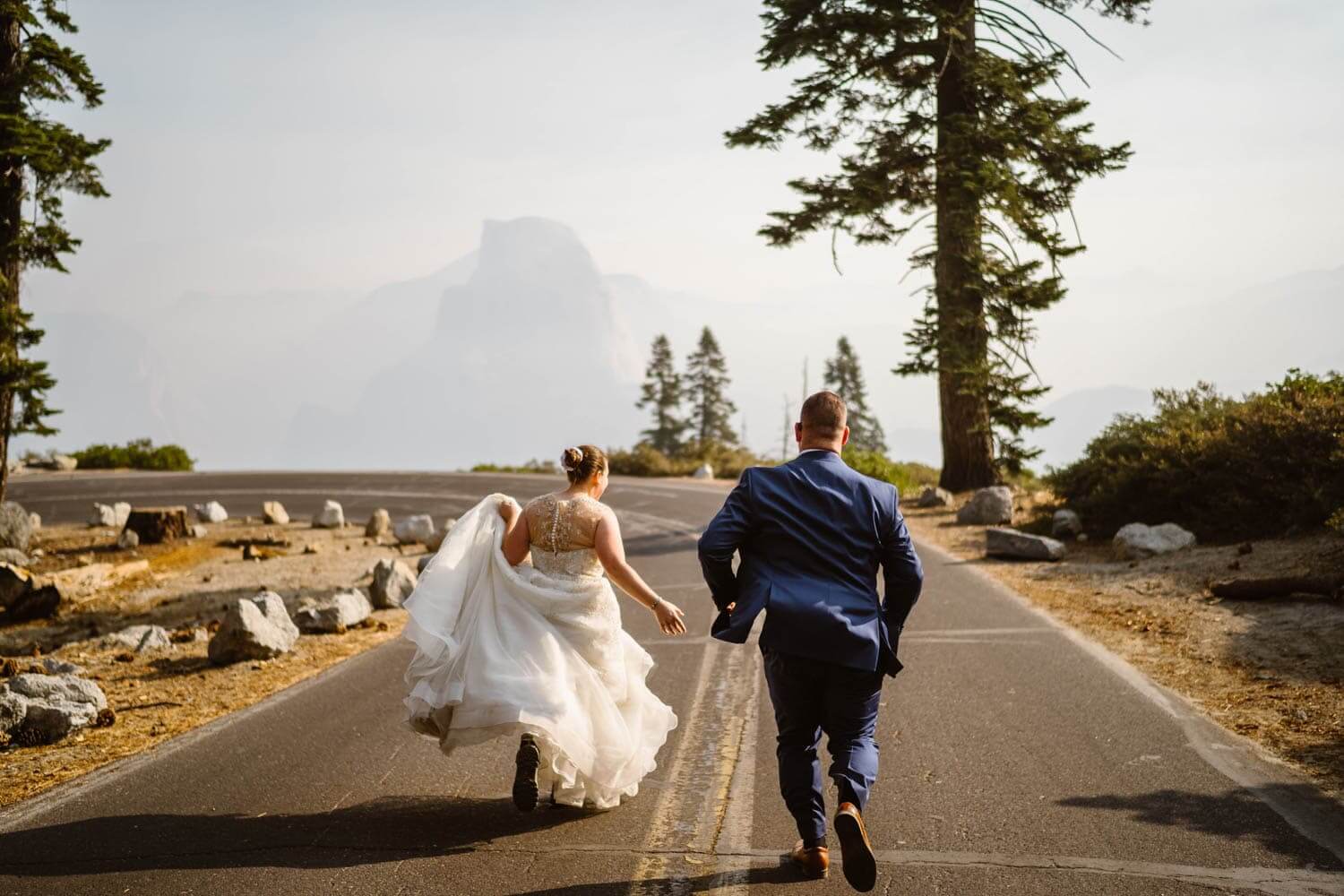
Travel tips for a Yosemite elopement
A well-built Yosemite elopement day usually looks something like this: early start, ceremony at your permitted location, portrait adventure through the park, late lunch or early dinner, watching the light die over the valley from somewhere quiet. You don’t need to rush any of it. That’s the whole point.
- Getting there: Yosemite is about four hours from San Francisco and two and a half hours from Fresno. If you’re flying in, Fresno-Yosemite International Airport puts you closest. Plan to arrive the day before your permit date. Don’t try to fly in and drive straight to a sunrise ceremony.
- Where to stay: The Ahwahnee Hotel and Yosemite Valley Lodge are the only in-park hotels open year-round. Both are solid and put you close to everything. Just outside the west entrance, Rush Creek Lodge and Spa is a great option with a spa if you want to treat yourselves. For more flexibility and space, Yosemite West vacation rentals are about 20 minutes from the valley and often run significantly cheaper.
- Food: The park has limited dining options and none of them are set up for a wedding-day meal without a reservation. Pack your own food and eat somewhere with a view. That’s the better call anyway. That said, Curry Village is my go-to stop before or after an elopement. The pizza is genuinely good and it’s been part of my Yosemite routine for years.
Vendors you’ll need:
- A licensed officiant (required; ordained friend is fine if credentials are valid in California)
- A witness (at least one, can be your photographer)
- A florist if you want florals (just tell them about the Baby’s Breath ban)
- Hair and makeup if you want it done in the park. Book someone willing to do an early call time
Your Yosemite elopement starts now!
I’ve been coming to Yosemite since I was a kid. Curry Village camping trips, fishing the Merced, riding bikes around the valley. I know this park the way you know your hometown, and seven years of elopements here has just added more layers to that.
What I actually do is part photographer, part trail guide, part logistics coordinator, and full-on hype man for your day. I’ve had couples show up nervous, people who’d never done a photoshoot in their lives, and watched them forget I was even there an hour in. I’ve had people tell me they couldn’t decide which photos to print because every single one was a keeper. I’ve had couples show their galleries to friends and family who asked if the images were photoshopped because they didn’t look real.
That’s Yosemite doing its thing. And it’s me knowing exactly how to put you in the middle of it. Let’s go do this!

Yosemite FAQ
Yosemite wedding and elopement permits start at $150, depending on location and ceremony size. Additional fees may apply for larger groups or special services. Permits are non-refundable, so planning ahead is key.
Yes, Yosemite accommodates family elopements with its designated ceremony spots. Many couples start privately for vows and photos, then regroup with family at another location for a second ceremony or group portraits. If you want to go deeper on this, check out my guide on how to plan an elopement with family.
The best Yosemite elopement locations depend on the season and your vision. Taft Point and Glacier Point are stunning but seasonal, while Yosemite Valley spots like Cathedral Beach, Swinging Bridge, El Capitan Meadow, and Yosemite Falls are accessible year-round.
Yes. Every Yosemite elopement requires a National Park Service special use permit regardless of group size. The application fee is $150 and needs to be submitted at least 21 days before your date. I handle this process for every couple I work with.
Yes, Yosemite requires timed entry reservations during peak weekends unless you have on-site lodging. Ceremonies must occur at designated locations with guest limits, and all visitors must follow Leave No Trace principles.
It depends on your ceremony location. Some of the larger designated spots like Cathedral Beach accommodate up to 50 guests. Smaller or more remote locations have lower caps. If you’re planning to bring a group, location choice and permit details matter, so it’s worth working through that early in the planning process.
Half Dome is not one of the designated ceremony locations in Yosemite, so a standard wedding permit won’t cover it. That said, you can apply for a special use permit directly through the park for non-standard locations. It’s worth asking about if Half Dome is your dream spot, but go in knowing it’s not a guaranteed yes.
Honestly, the best move is to pack your own food and bring it in. It saves money and you’re not scrambling for a table on your wedding day. That said, Curry Village is my go-to stop before or after an elopement. The pizza is genuinely good and it’s been part of my Yosemite routine for years. The park has snack options scattered around the valley but don’t count on a sit-down meal without a reservation.
Yes. California law requires a licensed officiant to perform a legal marriage ceremony, so Yosemite elopements work differently than Colorado where self-solemnization is an option. If you want to skip the legal side in California, a popular approach is getting legally married at home beforehand and doing a vow ceremony in the park. You get the Yosemite experience without the California paperwork, and it’s completely valid.
Yosemite elopements are special because couples can exchange vows in iconic locations like Half Dome or in quiet, private corners of the park. The mix of breathtaking scenery, accessibility, and raw wilderness creates unforgettable moments.
To get a Yosemite wedding or elopement permit, you must submit a Special Use Permit application with your preferred location, date, guest count, and officiant details. Some sites require insurance. Approval can take weeks, so plan early.
Most Yosemite wedding permits are approved if submitted correctly and follow park guidelines. Approval depends on location, guest count, and time of year, so flexibility and complete information, including officiant and backup locations, improve your chances. Most permits are approved if you submit correctly and follow park guidelines. I’ve navigated this process for every couple I’ve worked with in Yosemite and a complete, flexible application with a solid backup location gets approved the vast majority of the time.
It depends on the type of California marriage license you choose. A public marriage license requires at least one witness (age 18 or older) to be present and sign the license. A confidential marriage license requires no witness at all, making it the go‑to choice for eloping couples who want complete privacy.
Absolutely. Winter in Yosemite is quiet and covered in snow, and the valley looks like a painting. Many trails and roads close, but locations like Tunnel View, Valley View, and Cathedral Beach remain accessible. A winter elopement usually requires microspikes and a lot of warm layers, but the solitude is worth it. Just be aware that Glacier Point Road closes and some high‑country ceremony sites become unreachable, so stick to the valley floor.
No. The use of drones is strictly prohibited everywhere within Yosemite National Park. This includes takeoff, landing, and operation from any park land. Violations can result in fines and confiscation of equipment. If you want aerial footage, you’ll need to work with ground‑based angles or consider a helicopter overflight service that operates outside park boundaries, which is rarely practical for an elopement.